
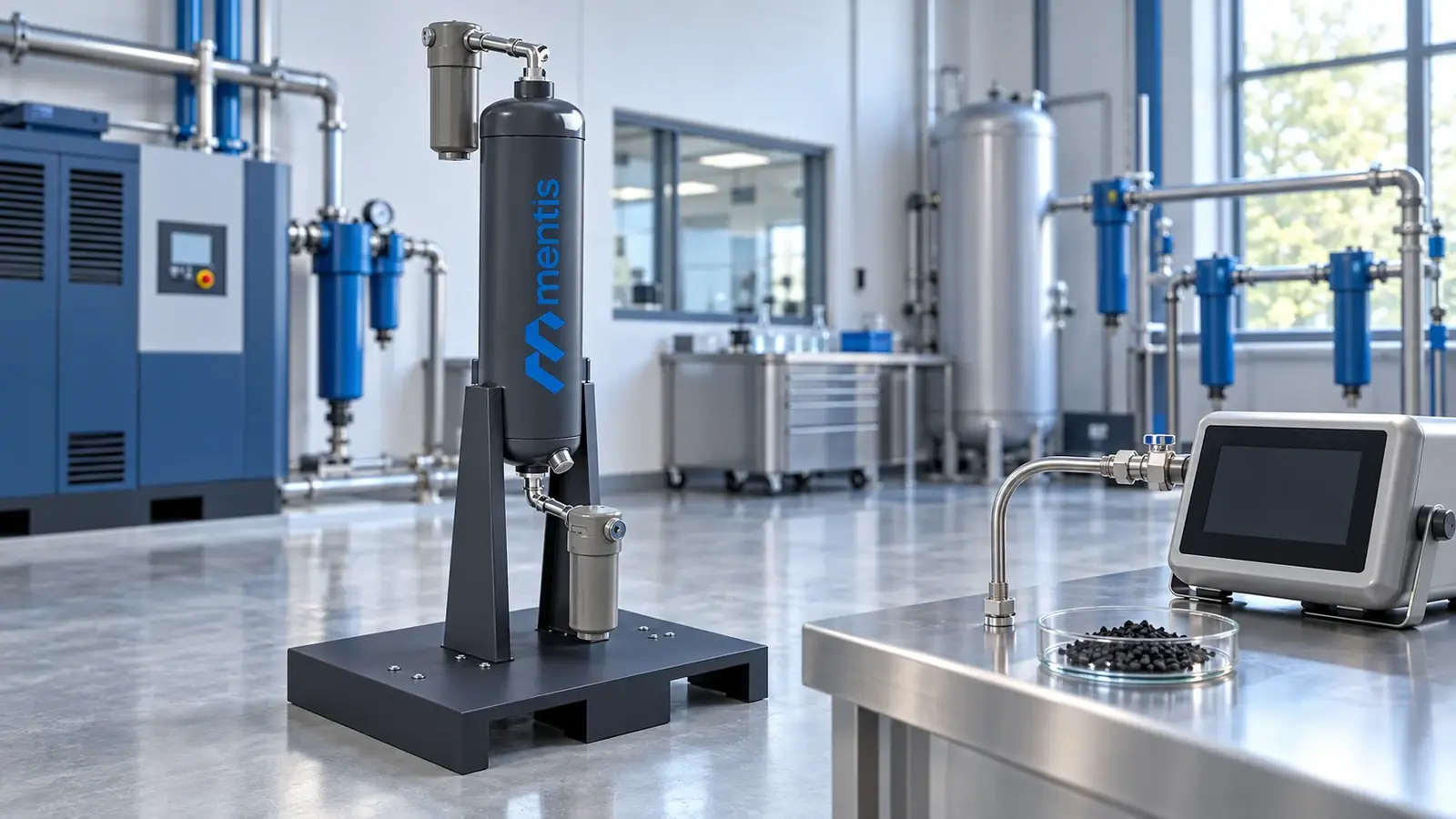
An activated carbon tower adsorbs oil vapor, but its usable adsorption capacity is finite. A rising outlet contaminant level requires investigation; it does not automatically prove that the entire carbon bed is saturated.
Contaminant loading can reduce purification performance without a noticeable increase in pressure differential. Conversely, high pressure loss may indicate dust, a flow restriction or a filter problem. Neither odor nor the appearance of the carbon is sufficient to approve air quality.
Use an oil vapor measurement method with a suitable range and detection limit at the tower outlet. Check sampling lines, instrument verification and manufacturer gas compatibility. An oil vapor result is not a total oil result including liquid oil and aerosols. Assess the components required by the process specification separately and check the point of use for critical applications.
Oil loading, temperature, humidity, flow and pressure affect service life. Inspect upstream aerosol filtration, condensate drainage, dryer performance, bypass positions and recent operating changes. Incorrect filling or channeling can also let contaminants pass without adequate contact with the bed.
Keep commissioning measurements as a baseline. Assess outlet trends, operating history and the manufacturer's replacement criteria together; there is no universal hour limit. Follow the process quality procedure if limits are exceeded. Qualified personnel must replace media only after safe isolation and depressurization. Share your measurements and inlet conditions with Mentis to evaluate the tower's maintenance requirements.