
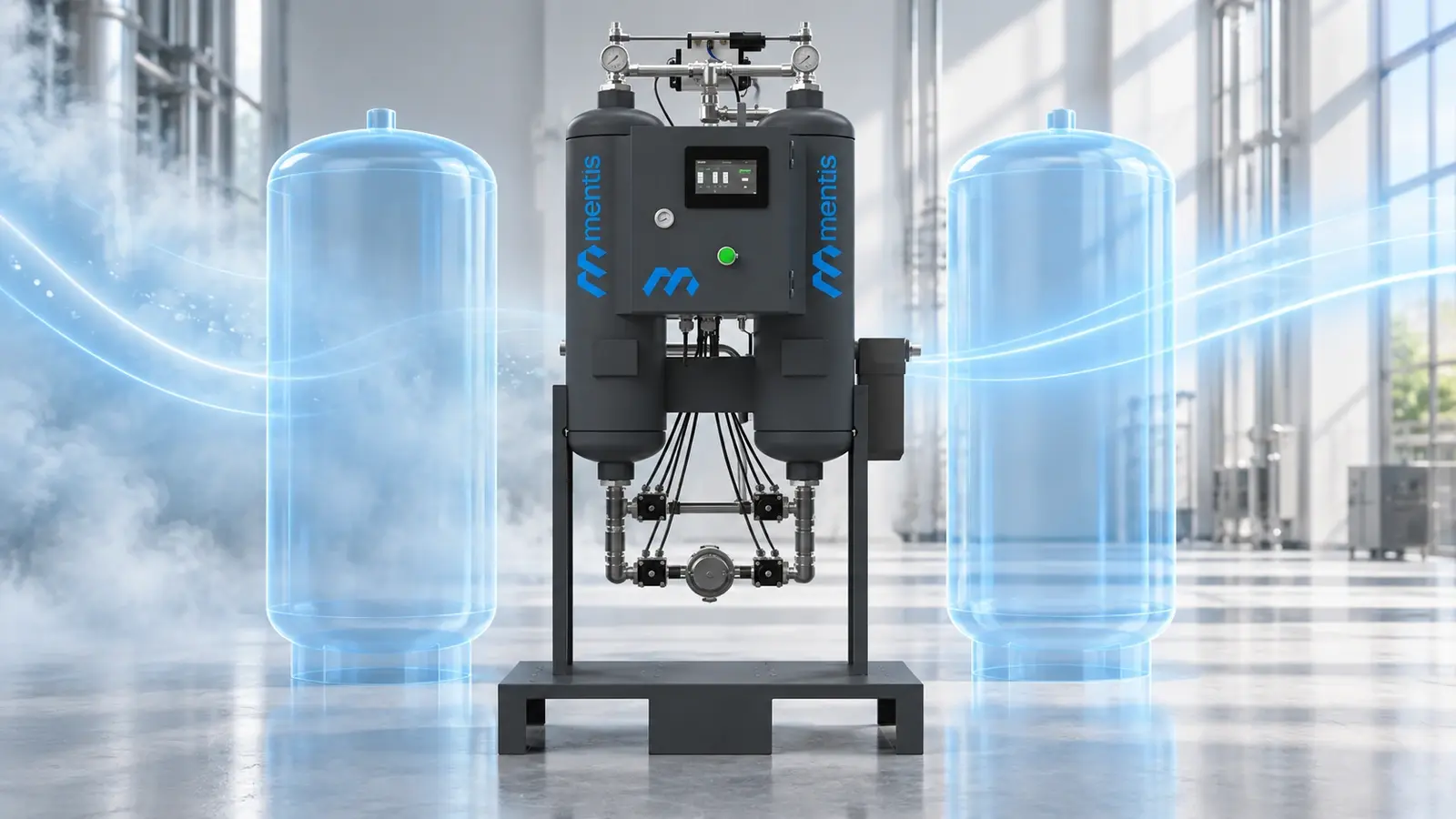
Receiver placement depends on compressor control, dryer capacity and the demand profile. Storage before the dryer is commonly called wet storage; storage after air treatment is dry storage. A plant may need both, because their functions are not interchangeable.
It creates buffer volume on the compressor side. If the air cools in the vessel, some water can condense and must be removed through suitable drainage. The receiver is not a dryer and does not guarantee a specified pressure dew point. Peak flow drawn from wet storage also passes through the dryer, so selecting the dryer and filters solely for average demand can be inadequate.
A reserve of treated air can support brief demand peaks. Incoming dryer flow and air released from storage jointly supply the process. Performance depends on usable pressure range, receiver volume, piping losses and refill time. Dry storage cannot cure a continuous capacity deficit: pressure will still fall if demand exceeds production for too long.
Record average and peak flow, peak duration, minimum pressure at the PSA inlet and dryer capacity at actual inlet conditions. The compressor control sensor location must also suit the layout. Define vessel pressure rating, drains, protective devices and maintenance access within the project. Receivers and piping in contact with air after drying can affect air quality; assess final filtration at the point of use.
Size the compressor, desiccant dryer, receivers and PSA inlet together with Mentis Engineering. Provide your demand profile and allowable pressure range for a technical assessment.