
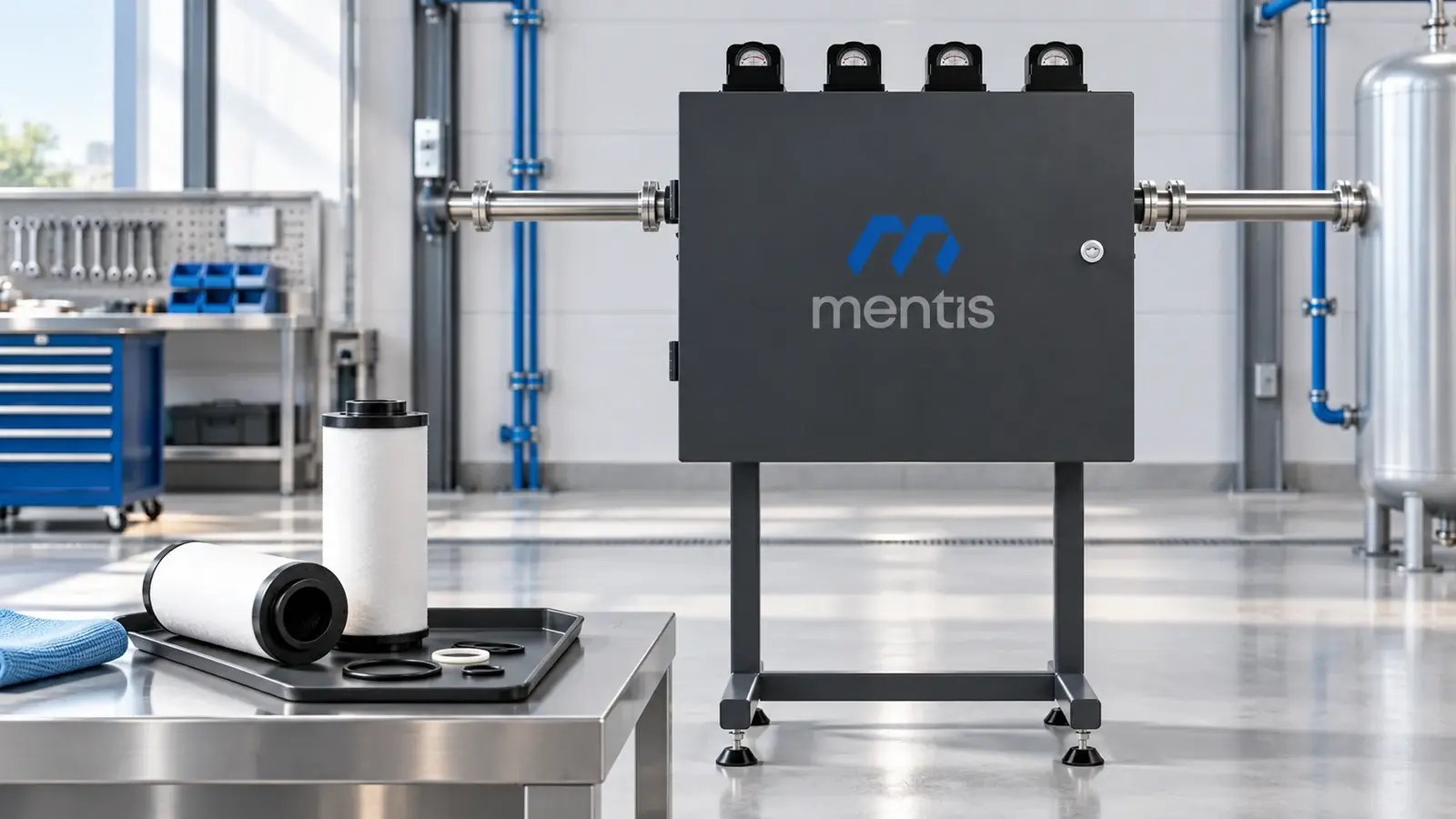
Compressed air filter replacement depends on the manufacturer's instructions, operating hours, contamination load and process air-quality requirements. A differential pressure indicator alone cannot prove that the element is in good condition.
The difference between inlet and outlet pressure represents resistance to airflow. Trend it under comparable flow and pressure conditions. Low differential pressure can be normal at low load, but it can also occur with a damaged element. Do not interpret it as an air-purity measurement.
Particulate, coalescing and activated carbon elements have different functions and service-life criteria. Carbon saturation cannot be determined from pressure drop alone. Follow the manufacturer's calendar and operating-hour limits; heavy contamination or unacceptable air quality requires earlier investigation.
Assess drains, sealing surfaces, bypass status and upstream treatment. Repeated early blockage calls for investigation of sizing and abnormal contamination. Installing another identical element may not resolve the underlying problem.
Match housing model, element code, filtration grade, flow, pressure and temperature limits. Two elements with the same dimensions do not necessarily provide equivalent performance. Replacement requires qualified personnel, isolation of energy and pressure sources, and confirmed depressurization.
Log the date, operating hours and new differential pressure under comparable load. Verify leak tightness and drain operation. For critical processes, confirm required air quality with suitable measurements. Share the filter model and service history with Mentis to determine the appropriate element and maintenance scope.