
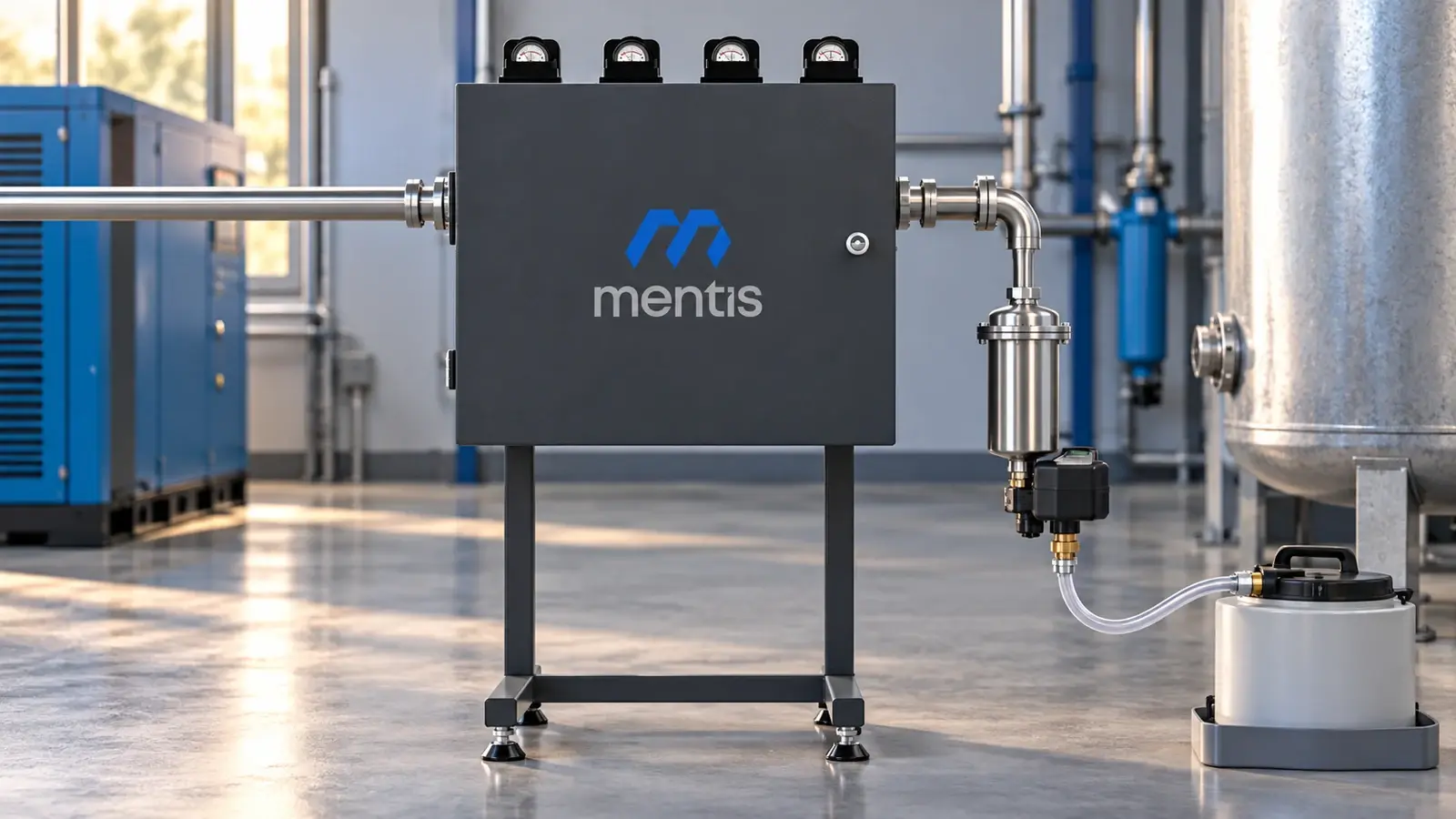
Condensate collected in aftercoolers, receivers, filters and dryers must be removed regularly. A drain stuck open can waste compressed air; one stuck closed can allow water carryover. These symptoms require different checks.
Persistent air discharge can relate to debris on a valve seat, worn seals, an open manual valve or unsuitable timer settings. Do not merely throttle the discharge to reduce noise. Record the drain location, pressure, drain type and when venting occurs.
A blocked inlet, closed isolation valve, electrical supply problem, level sensing fault or excessive discharge backpressure can prevent drainage. Mounting orientation, pipe slope and operating pressure must meet the model's requirements. A test button opening the valve does not independently prove correct level sensing or an unrestricted drainage path.
Condensate volume changes with temperature, humidity and compressor load. A timer drain opens independently of actual liquid accumulation, so its setting may cause excess air loss or inadequate drainage. Level-controlled designs respond to collected liquid. Their ability to limit air loss depends on correct selection, installation and maintenance; absolute zero leakage cannot be promised for every product.
Qualified personnel should clean or replace components after safe isolation and depressurization. Route condensate to suitable collection and treatment equipment, rather than the floor or an arbitrary drain. After repair, check discharge, leakage, alarms and downstream water accumulation at different loads. Share the drain type and symptoms with Mentis to develop a maintenance plan for your air treatment system.