
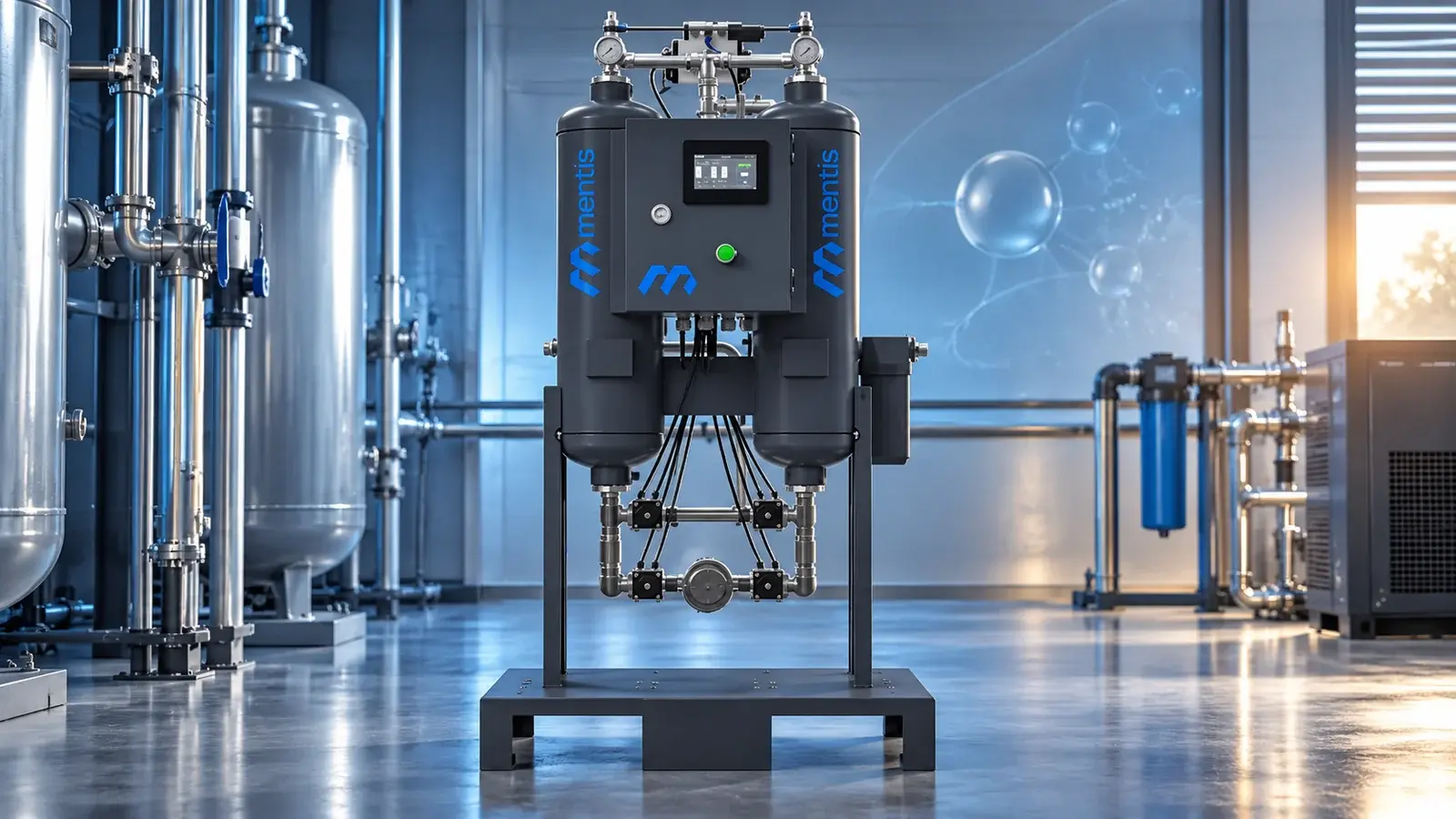
A rising outlet dew point can reflect a measurement problem or a genuine loss of desiccant dryer performance. One reading does not establish that the adsorbent is exhausted. Start with the measurement and assess the entire compressed air system.
Pressure dew point differs from the dew point of a sample expanded to atmosphere. Compare values on the same pressure basis. Check sensor calibration, sample flow and leak tightness; a stagnant branch or moisture-retaining hose can produce misleading results.
Review flow, minimum inlet pressure and maximum inlet temperature together. Compare the dryer with this operating point rather than catalog reference conditions. Check the aftercooler, water separator, drains and refrigerated pre-dryer where fitted.
Compare pressure and changeover records for both towers. Insufficient regeneration flow, leaking valves or a restricted exhaust path can affect drying. Heated models also require assessment of heating and cooling stages. Do not change purge or cycle settings without verified manufacturer values.
If the dryer outlet meets requirements but moisture appears downstream, investigate bypass leakage, wet-air mixing or previously wetted pipework. Record whether changes coincide with tower switching, shift starts or the hottest hours. This helps distinguish sensor, dryer and distribution faults.
Confirm suspected oil contamination, dusting or bed damage through a service assessment. Correct the cause before replacing the charge. Only qualified personnel should work on pressure equipment after isolation and verification of depressurization. Share the model, flow, temperature, pressure and dew-point trend with Mentis to define an appropriate maintenance scope.