
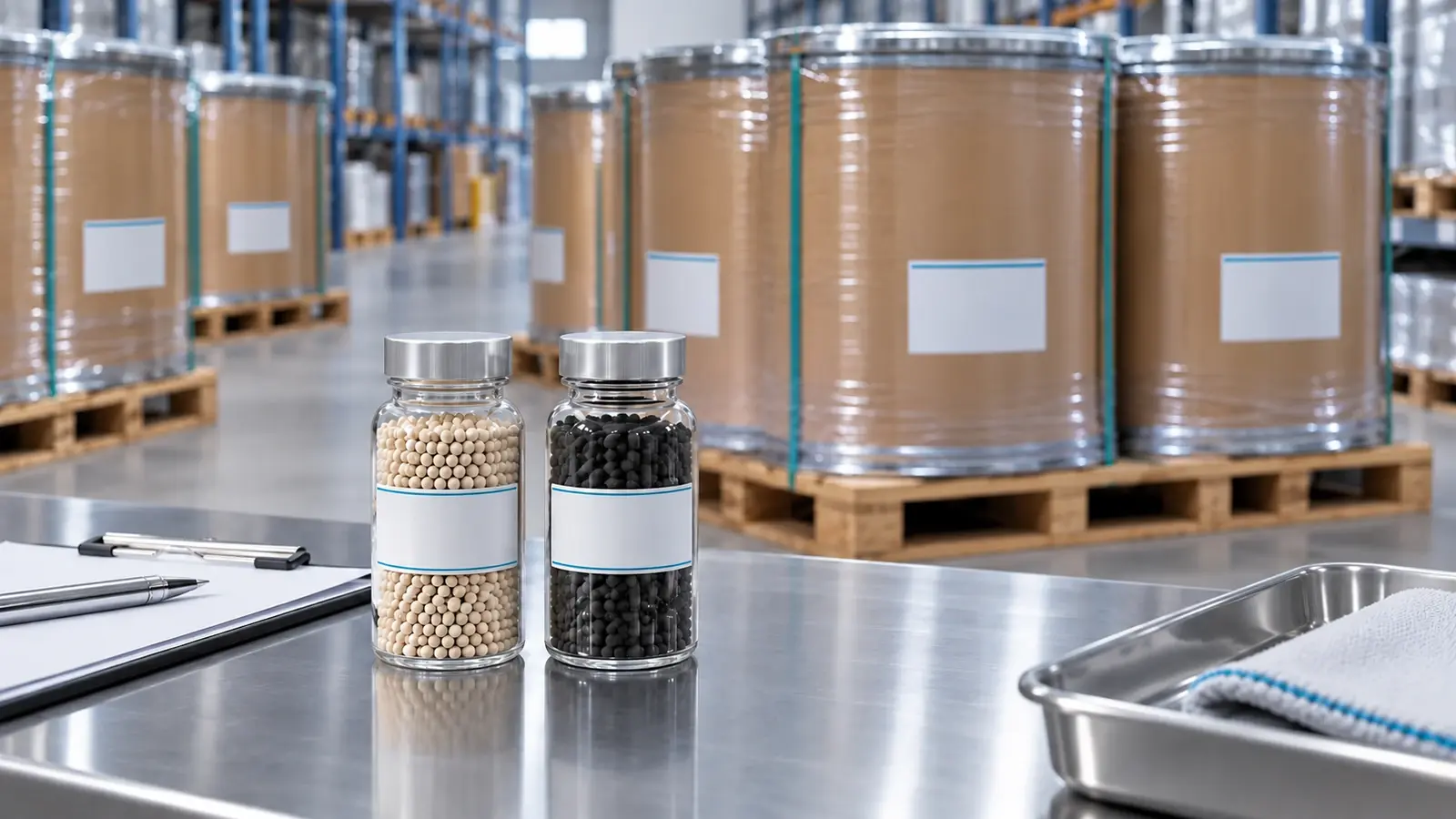
Molecular sieves and dryer adsorbents can take up moisture from ambient air. Moisture acquired in storage can affect initial performance before the material enters the system. Keep the product in its original sealed packaging until needed. Do not assume the same shelf life or storage conditions for CMS, activated alumina, silica gel and activated carbon; follow the specific technical data sheet and safety data sheet.
Check product code and particle size against the order, and record batch number and delivery date. Track manufacture and expiry dates where supplied. Inspect the lid, inner liner and outer package for punctures, wetting or loss of sealing. Segregate questionable packages from accepted stock and obtain the supplier's assessment before releasing them for loading.
Keep packages in a dry, clean area within the manufacturer's temperature limits, on pallets off the floor. Complete loading preparations before opening them; assess rain and condensation risks. Record quantities opened, opening time and remaining material. Resealing a partly used package does not automatically restore performance lost through moisture uptake.
Normal-looking particles do not prove that usable capacity is intact. Base acceptance on storage history, packaging condition and any inspection recommended by the manufacturer. Do not attempt reactivation in a domestic oven or with an arbitrary heating programme. Verify startup conditions and gas quality separately after loading.
Share product codes, batch details and storage history with Mentis Engineering when planning your adsorbent replacement.