
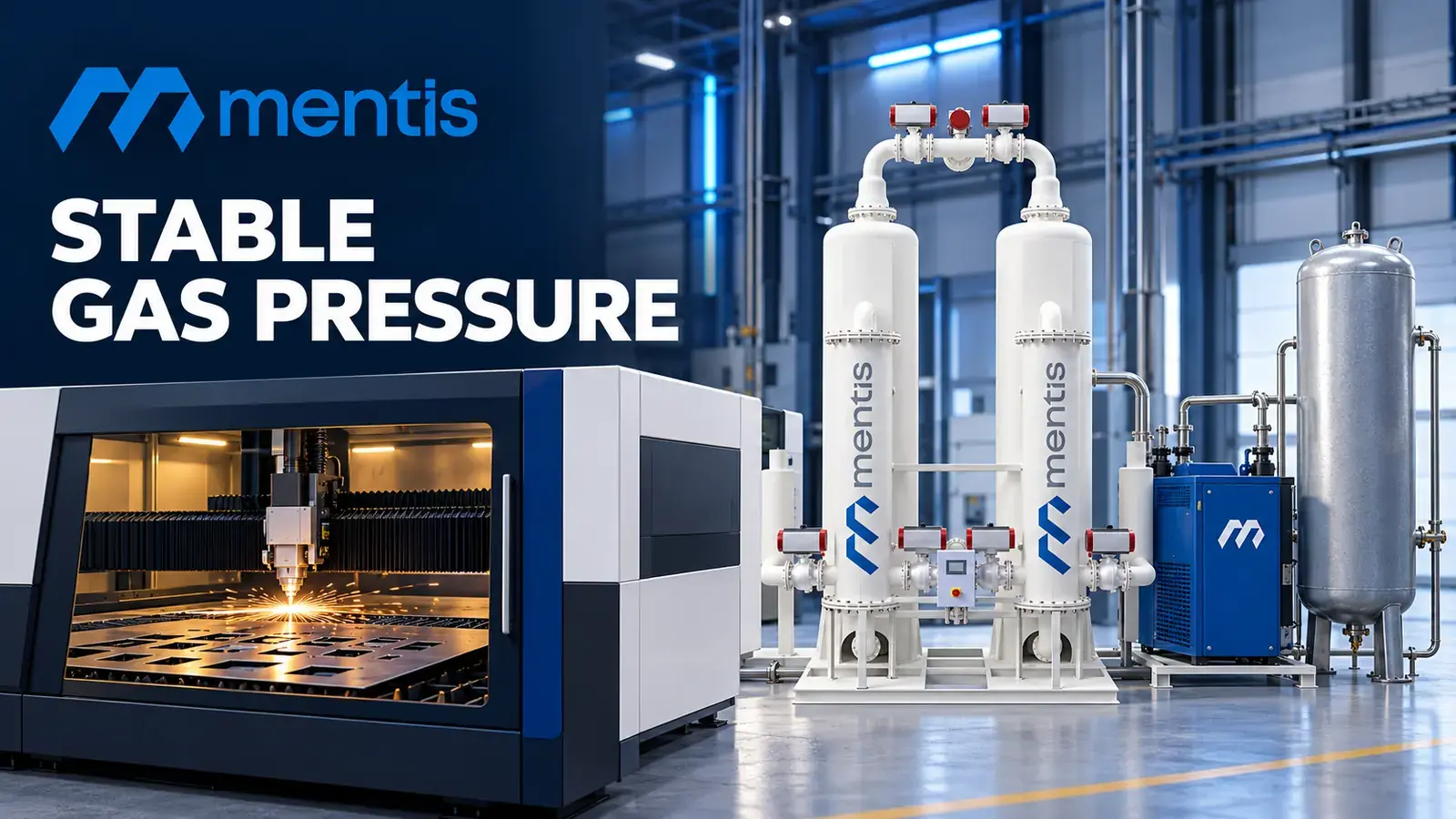
A pressure drop during laser cutting can occur when the supply system cannot deliver the required flow at the machine inlet. The generator is not always the cause. Diagnosis starts by distinguishing static receiver pressure from pressure measured at the point of use while cutting.
Pressure may look normal with the machine idle and fall as soon as gas starts flowing. Compare generator outlet, booster inlet, receiver outlet and machine inlet during the same cutting programme. Time-align readings to locate the restriction. Use the laser manufacturer's connection and pressure requirements.
Gas flow changes with nozzle geometry, pressure, material, thickness and cutting programme. Different jobs at the same laser power can impose different demand. If problems begin after a nozzle or programme change, an older average-consumption figure may no longer represent the actual operating duty.
Small or long pipes, numerous fittings, unsuitable regulators and loaded filters can create pressure loss during flow. A regulator's connection size alone does not establish capacity; examine its flow performance at the available inlet pressure. Identify restrictions before increasing the system pressure setting.
Booster delivery depends on suction pressure, discharge pressure and duty cycle. A larger booster cannot compensate for an inadequate gas supply from the generator. Review inlet buffering, controls and cooling together. Maximum discharge pressure alone is not a sufficient basis for equipment selection.
Usable reserve depends on both vessel volume and the permitted pressure range. Storage can support short peaks; sustained cutting also needs sufficient generation and replenishment rate. A receiver pressure that keeps declining across the shift can indicate a persistent mismatch between production and consumption.
No. Cut quality also depends on gas purity, moisture, nozzle alignment, focus, speed and material. Review gas records with machine settings rather than exceeding the manufacturer's limits. Work on pressure equipment requires competent personnel following isolation and depressurization procedures.
Share the laser model and power, materials, thickness range, nozzle details and pressure readings taken during cutting. Include your generator, booster and receiver specifications. Mentis can assess the bottleneck and prepare a proposal covering nitrogen generation, pressure boosting and storage for your production requirements.