
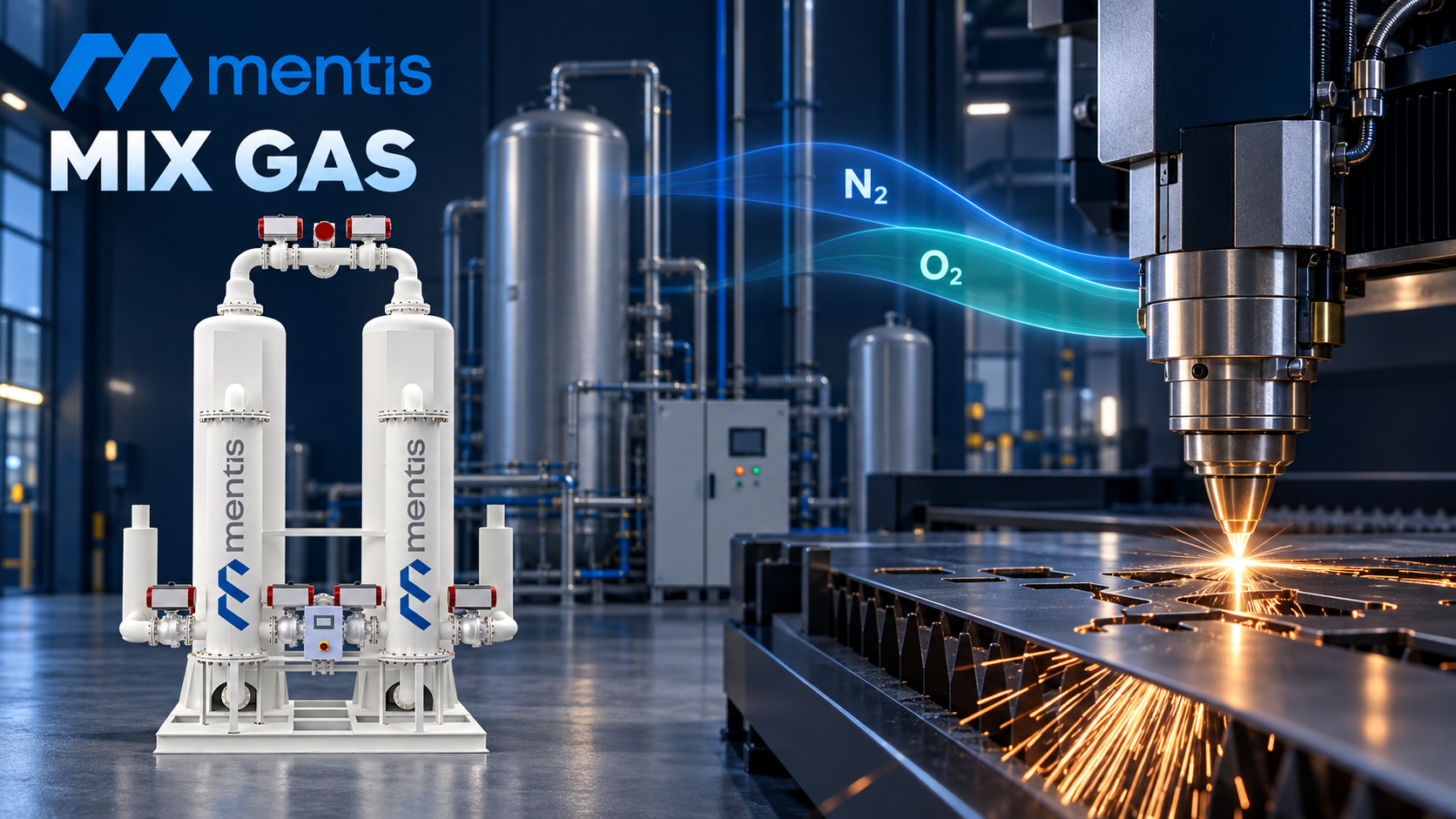
Assist gas composition is one of the factors shaping laser cutting performance. When matched to the material and process settings, the right blend can support cut quality and production efficiency.
What is mixed gas?
Mixed gas is a blend prepared for a particular process. In fiber laser cutting, it generally means adding a controlled amount of oxygen to a nitrogen-rich gas stream. The blend is selected for the material, thickness, laser source and required edge quality. It should not be treated as the same gas recipe as compressed air. [1] [9]
How does a mixed gas generator work?
A mixed gas generator solution can combine gas production and gas blending equipment in one engineered system. A typical arrangement includes a compressor, dryer and filters supplying a PSA nitrogen generator, a suitable oxygen source and a controlled gas mixer. Receivers and a booster are selected to suit pressure and flow requirements. Oxygen does not necessarily have to be generated on site. Mixer inlet pressures are monitored, and the outlet blend is verified using an appropriate analyser. Simply joining two supply lines does not establish stable gas composition. [2] [3] [4]
What does mixed gas do in laser cutting?
The gas flow helps remove molten metal from the kerf. Oxygen reacting with the metal can contribute additional heat. With suitable materials and settings, a mixed gas process can reduce burr formation and improve cutting performance. However, oxygen addition affects edge oxidation; it should not be assumed to deliver the same result as pure nitrogen when an oxide-free edge is required. [5] [6]
Where is mixed gas used?
Carbon steel and suitable aluminium applications are key areas for evaluating mixed gas laser cutting. Potential production settings include machinery manufacturing, automotive and trailer components, agricultural equipment, metal enclosures and sheet metal job shops. Stainless steel requires separate consideration of appearance, corrosion requirements and subsequent processing. [6] [7]
Gas mixtures beyond laser cutting
Gas blending also serves welding shielding gases, modified atmosphere food packaging and helium leak testing. These processes may require other components, including argon, carbon dioxide or helium. A nitrogen–oxygen laser cutting blend cannot simply be transferred to these applications; gas quality and mixing equipment must be selected for the intended use. [8] [9] [10]
How should the system be selected?
Evaluate material and thickness distribution, laser power, nozzle design, focus settings, peak demand, operating hours, dew point and pressure at the point of use. Sample cuts should compare burr, edge oxide, speed and preparation needed before painting or welding. Material compatibility and cleanliness for oxygen service form part of system design. Operating cost assessment should cover the entire installation, including the compressor, dryer and booster. [11] [12]
Application-specific mixed gas solutions with Mentis
The approach to Mentis mixed gas solutions is to assess on-site generation, blend control and laser line requirements within the same engineering project. Configuration is defined around site conditions and the laser manufacturer's requirements. Share your material list, laser specifications and consumption profile with the Mentis engineering team to evaluate a suitable system. [Mentis]