
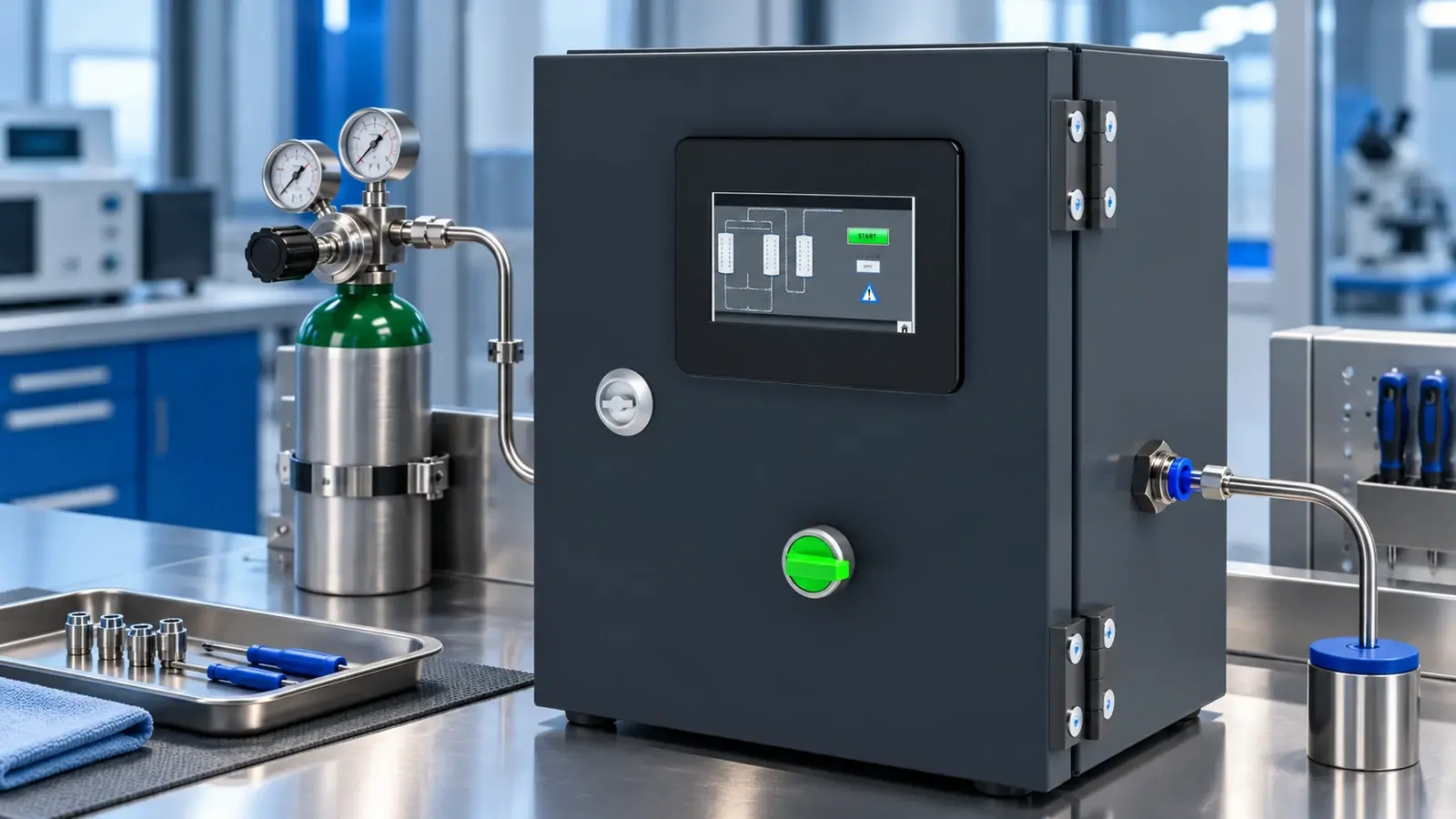
Nitrogen analyzer calibration evaluates an instrument against a known reference; any necessary adjustment is a separate step. At low ppm levels, reliable results depend on the sampling system and reference gas as well as the sensor.
Many analyzers in nitrogen systems measure residual oxygen. A reading of 100 ppm O₂ equals 0.01% O₂ by volume. Oxygen alone, however, cannot establish total nitrogen purity including the effects of moisture, argon and other constituents. Check how the displayed N₂ value is calculated against the process specification.
Check the certified mixture, uncertainty, validity and balance gas. Whether zero and span operations are required, and their sequence, depends on sensor technology. Air calibration is appropriate only when the instrument manufacturer permits it; there is no universal procedure for every ppm sensor.
Use a suitable regulator, leak-tight connections and the manufacturer's specified sample flow. Air ingress, inadequate purging or changing outlet pressure can distort readings. Wait for a stable signal before adjustment; do not conceal a rising reading by simply resetting zero.
Record the reference value, readings before and after adjustment, temperature, pressure and gas certificate. Compare the local analyzer display with the PLC value; analog signal scaling needs its own check. Define acceptance criteria in advance using process requirements and measurement uncertainty.
Set calibration intervals from the instrument manual, drift history and process criticality. Verify performance after sensor or sampling-line changes. Share the analyzer model, operating range and recent readings with Mentis to assess a suitable verification and maintenance plan for your nitrogen system.