
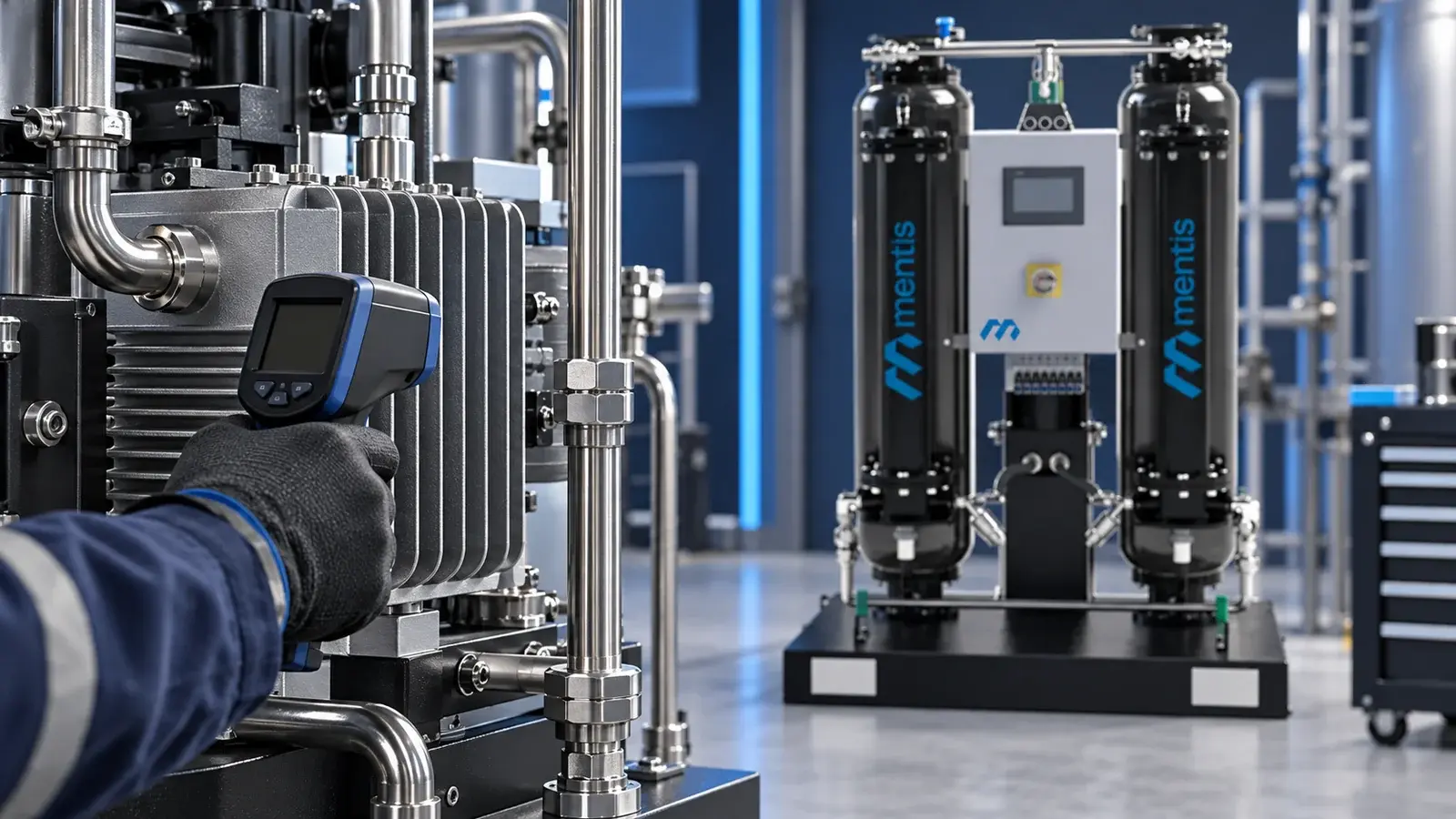
Cylinder discharge gas, intercooler outlet, bearing and casing temperatures are different quantities. First identify the alarm sensor and its installation point. Infrared measurements on shiny metal can be affected by reflections and emissivity; they are not a direct substitute for a gas temperature sensor. Compare records with healthy operation at the same load and the limits for the specific model.
Compression heats the gas. With other conditions comparable, a higher stage pressure ratio or warmer suction gas can increase discharge temperature. Evaluate the ratio using absolute discharge pressure divided by absolute suction pressure, not gauge pressures. Final discharge pressure alone is insufficient for a multistage system. Record suction and discharge pressures and temperatures for each stage at the same time.
Dirty cooling surfaces, insufficient air or water flow and recirculation of hot air can limit cooling. Review the gas temperature entering the next stage and the condition of the cooling medium. Valves, piston rings or other internal components may also need assessment, but temperature alone cannot establish a specific fault. Lubrication checks must reflect whether the machine is lubricated or oil-free.
Match model, serial number, gas composition, ambient conditions, running time, load and alarm time with the pressure-temperature records. Flow, motor current and recent maintenance changes support diagnosis. Do not raise alarm limits or disable protection. Follow the manufacturer's shutdown procedure for recurring alarms; verify isolation, depressurization and cooling before intervention. After correction, recheck performance under comparable conditions.
Prepare stage pressure-temperature records and alarm history for a technical assessment with Mentis Engineering.