
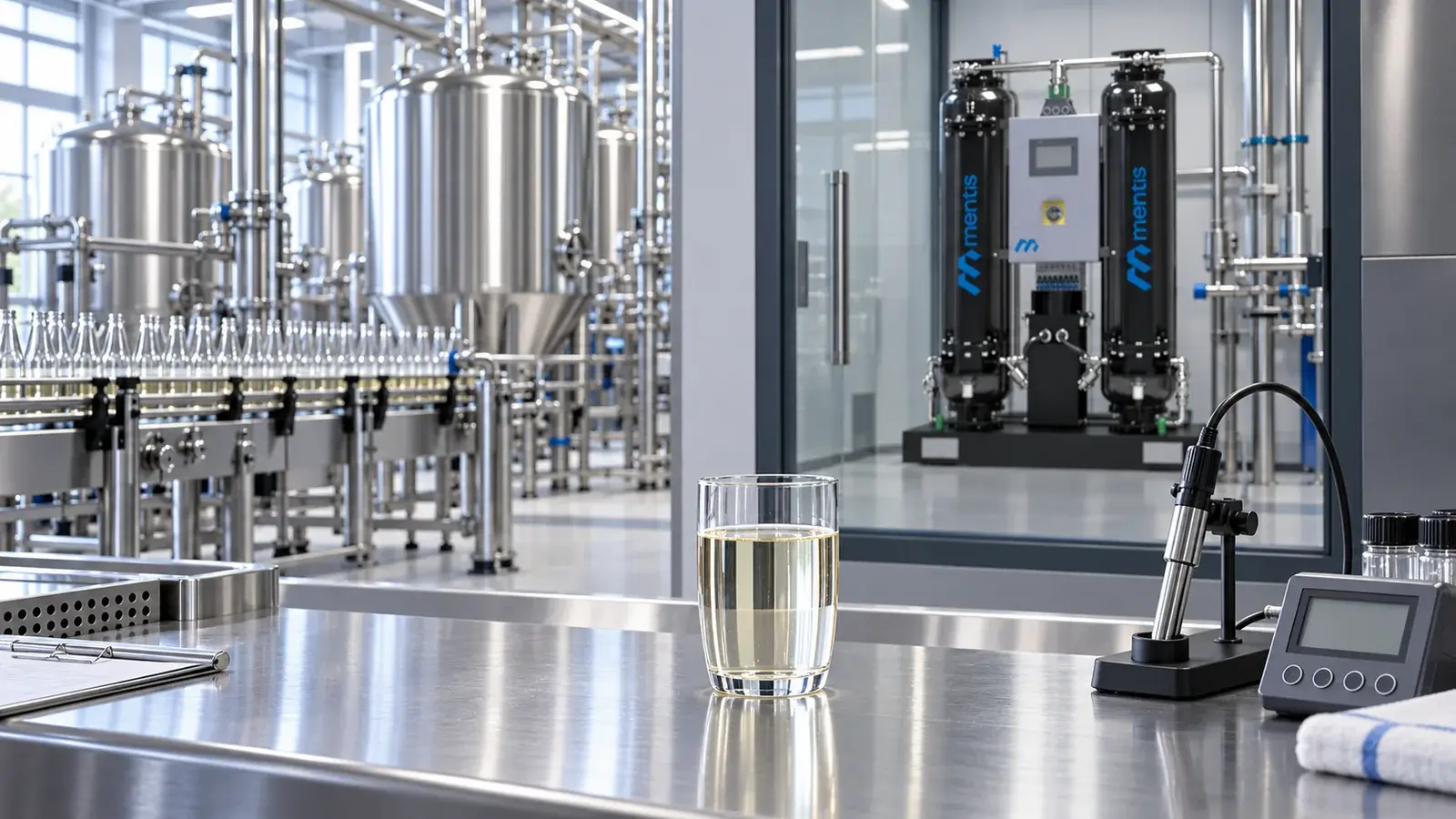
In a suitable gas-liquid contact system, nitrogen with low oxygen content can support oxygen transfer from liquid into the gas phase. Oxygen is then removed with the stripping gas through a controlled vent. The method for process water or a beverage depends on the recipe and process equipment. Simply adding nitrogen to a tank does not prove that the liquid has reached its oxygen target.
Residual oxygen at the generator outlet, oxygen in the tank headspace and oxygen dissolved in the liquid are different data. The product quality team should set the liquid target and clearly define units and sample points. Gas ppm cannot be directly equated with liquid mg/L. Use a dissolved oxygen sensor with a suitable range; control air contact during sampling and follow the sensor's verification requirements.
Evaluate liquid flow, temperature, contact time, gas distribution and incoming oxygen together. Increasing gas flow alone is not a process recipe; check foaming, aroma loss and the intended dissolved-gas balance too. Nitrogen does not fulfil a carbonation requirement, and some products need a different gas or process arrangement.
Food-contact suitability cannot be inferred from nitrogen percentage alone. Validate air treatment, gas purity, contaminants, final filtration and hygienic connections against the site's quality plan. At different production loads, record dissolved oxygen before and after treatment, results after filling and nitrogen consumption. Select generator capacity from that validated demand profile; shelf-life claims require separate product validation.
Assess your nitrogen system with Mentis Engineering using liquid flow, dissolved oxygen targets and measured trial consumption.