
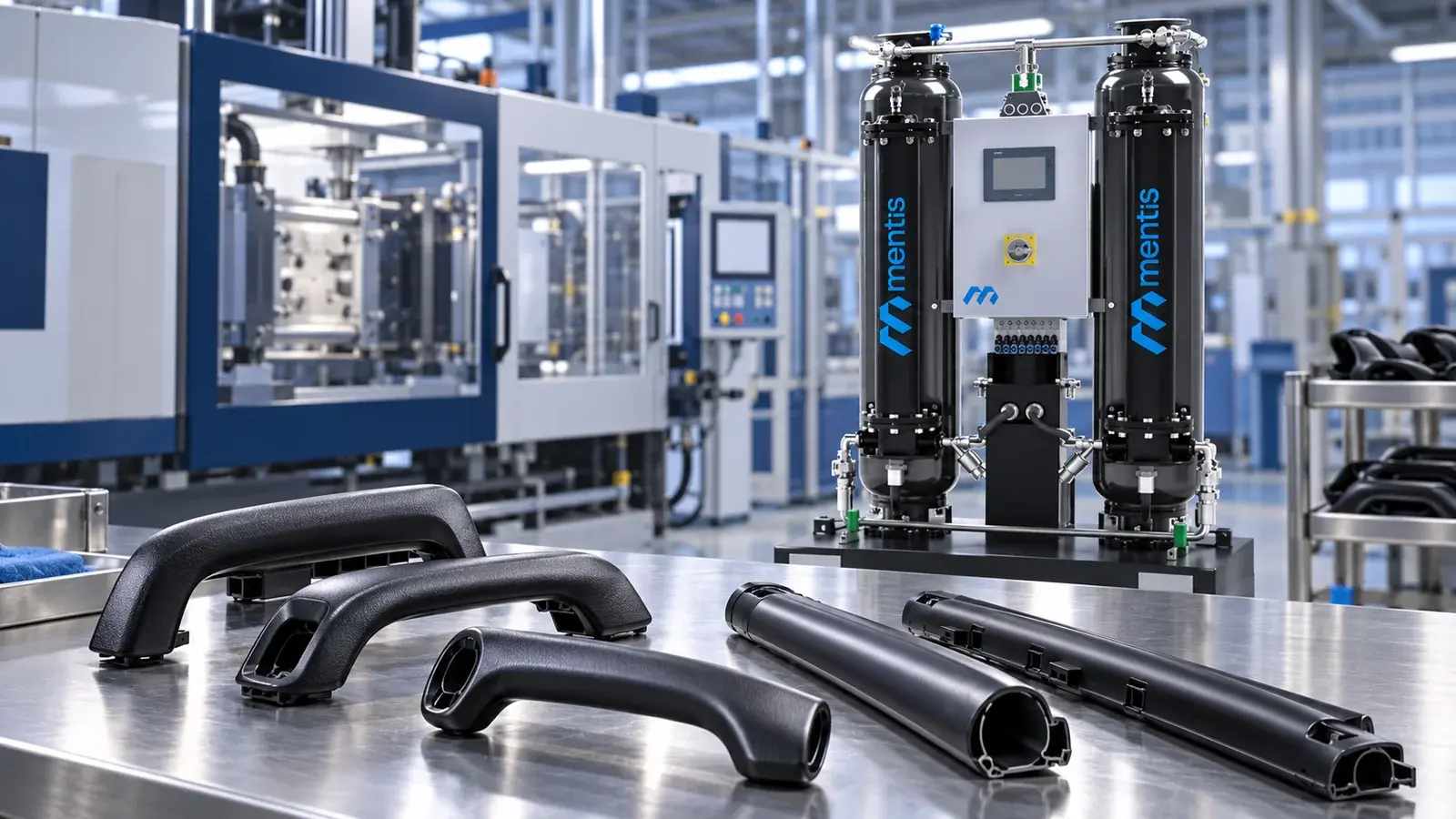
In gas-assisted plastic injection molding, controlled nitrogen forms internal gas channels and provides internal pressure during cooling, depending on the design. With suitable part geometry, polymer and tooling, it can help reduce sink marks and material use. Do not assume that every part is suitable or will deliver the same benefit; process trials are necessary.
Obtain gas quality, supply pressure, the pressure-time profile and consumption per cycle from the machine and gas-controller manufacturers. Confirm the reference conditions for the reported gas volume. Average demand equals reference gas volume per cycle multiplied by cycles per hour; simultaneous demands from multiple machines require separate evaluation. The hourly average alone does not describe brief peak flow.
The PSA generator produces gas at the required quality; the booster raises pressure within its permitted inlet conditions. Storage can support short demands but cannot replace the gas control unit. Usable storage depends on upper and lower operating pressures, temperature and gas compressibility at high pressure. Do not select a receiver by geometric litres alone; assess booster refill time and minimum process supply pressure together.
Define the gas recipe with the machine and mold specialists. Monitor supply pressure stability, consumption, leakage and gas quality alongside part weight, dimensions, surface finish and acceptance criteria. Nitrogen purity alone does not establish oil, moisture or particle compliance. Include controlled venting, ventilation, pressure protections and safe energy isolation in the project. Validate savings and cycle-time results through your own production trials.
Prepare machine count, cycle time, gas recipe and measured consumption for a system assessment with Mentis Engineering.