
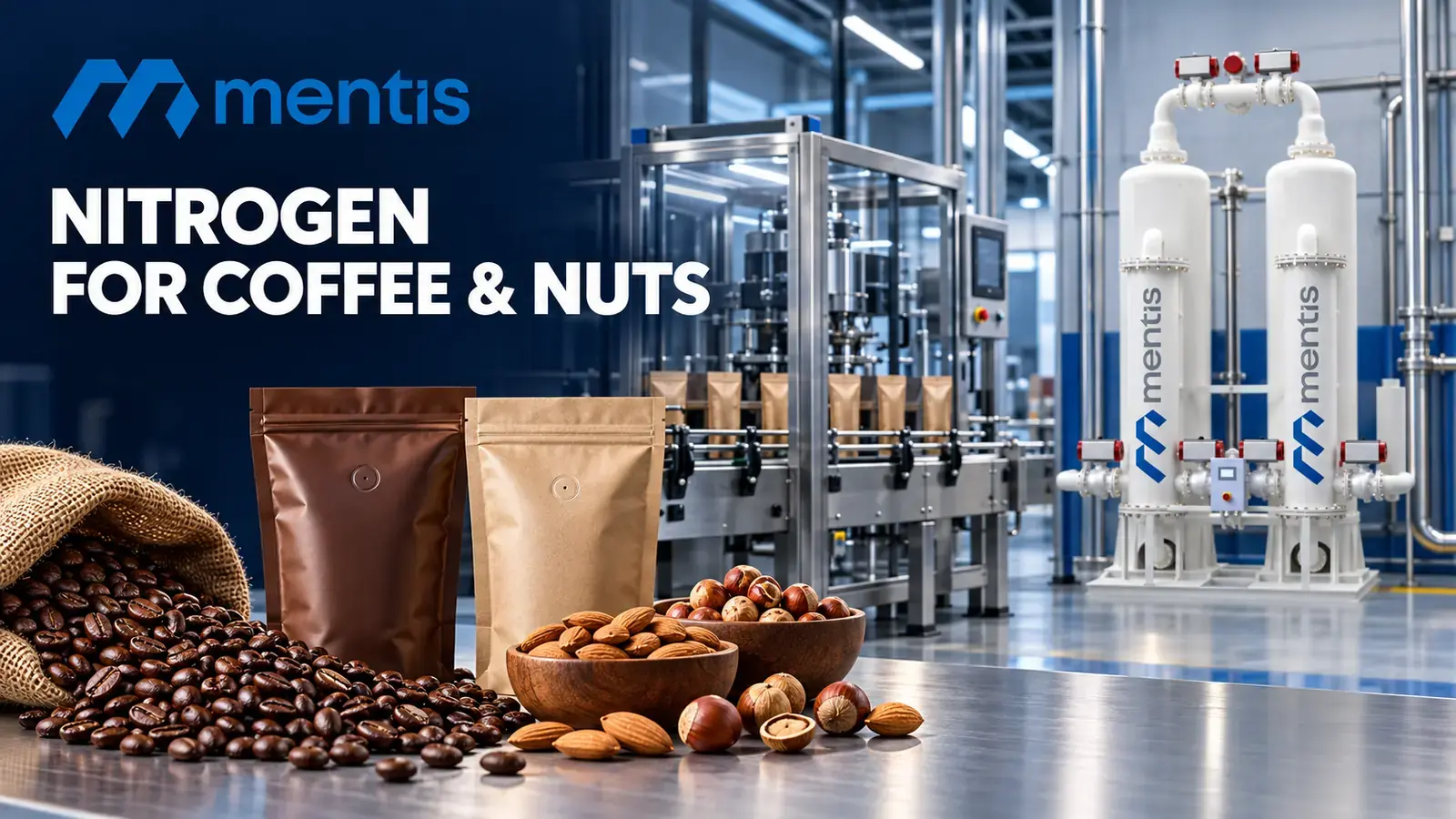
Nitrogen flushing displaces air inside coffee and nut packaging to reduce oxygen exposure. The useful performance measure is not simply generator purity: it is the atmosphere achieved in the sealed pack and how effectively the packaging preserves it during storage.
Oxygen can contribute to lipid oxidation in nuts and unwanted changes in coffee aroma. Nitrogen flushing aims to limit this exposure. It does not sterilise the product or replace control of initial quality, moisture and hygiene. Any shelf life claim should be validated using the actual product, package and storage conditions.
Low oxygen at the generator outlet does not guarantee the same oxygen level inside a sealed pack. Entrained air, product structure, injection position and sealing timing affect the result. Food application suitability also requires a defined gas specification covering relevant contaminants; an oxygen reading alone does not establish total gas quality.
Roasted coffee may continue releasing carbon dioxide after packing. A suitable one-way valve helps this gas escape. Degassing and nitrogen flushing perform different functions and should be considered together. Post-roast waiting time, grinding, valve selection and packaging construction all influence the final packaging strategy.
Use production speed, measured gas consumption per pack, operating hours and simultaneous lines to build the demand profile. Include startup flushing and changes in production rate. Package volume is not automatically equal to nitrogen consumption. Compare flows on the same reference temperature and pressure basis, and check pressure at the packaging machine.
A film with unsuitable oxygen barrier properties or a weak seal can undermine the atmosphere created during filling. Review packaging materials, sealing parameters and leak test results alongside the gas system. Increasing nitrogen purity cannot compensate for a leaking pack. The assessment must include the packaging line, not just the generator.
Record residual package oxygen together with line speed, gas use and seal integrity. Sampling across shifts and product changes reveals variability that a single test can miss. Representative storage trials should assess aroma and oxidation where relevant. This provides a defensible basis for choosing operating settings and evaluating the investment.
Share your product, pack size, line speed, measured nitrogen demand, working hours and gas quality target with Mentis. Request a technical proposal that considers generation, air treatment, storage and analysis together, matched to the requirements of your packaging process.