
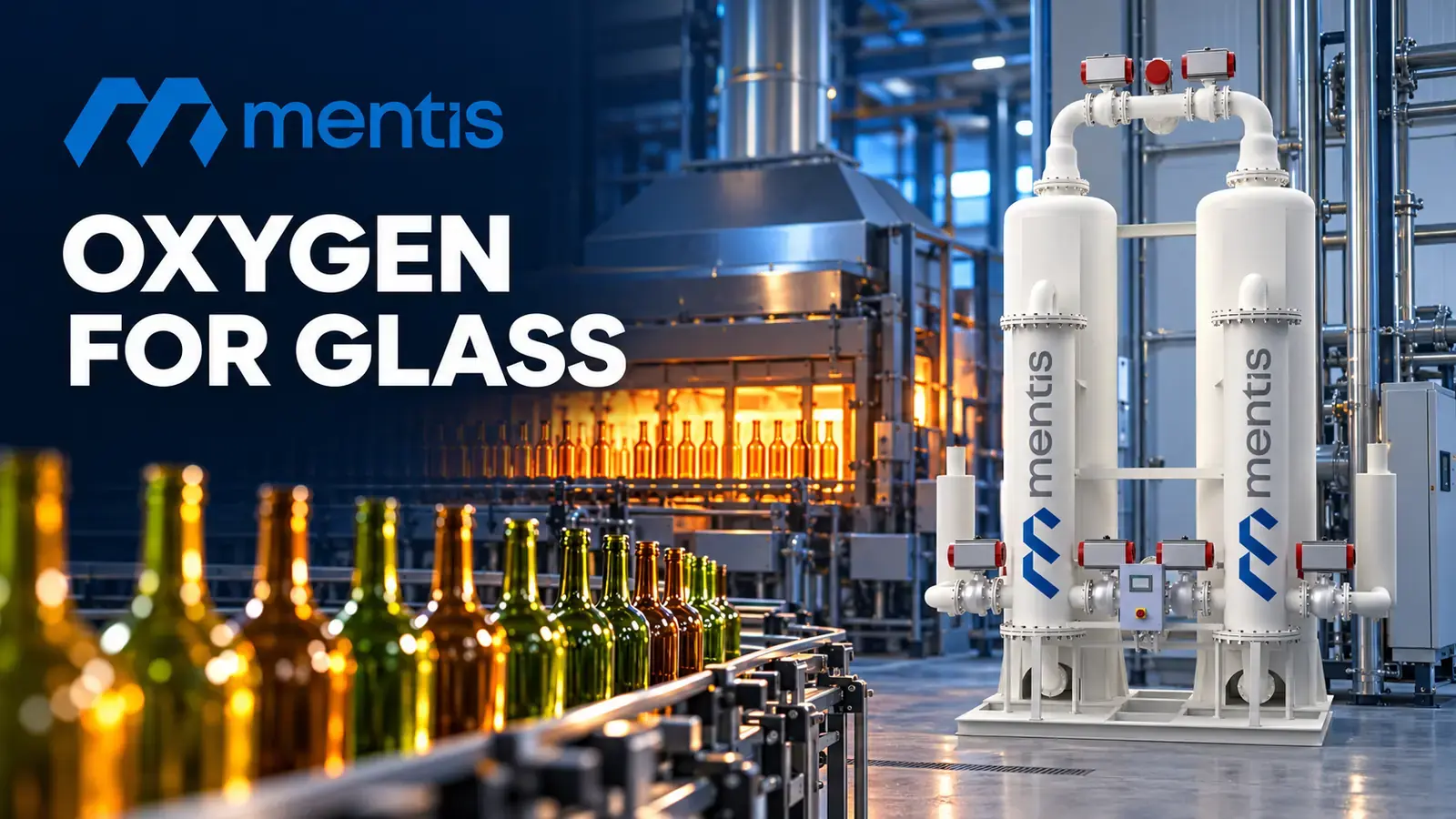
In suitable combustion systems, oxygen supports heat delivery for glass melting. An oxygen generator cannot be selected independently of the furnace. First define the existing combustion arrangement and intended application, then assess generation against the required purity, flow, pressure and continuity.
Replacing some or much of the combustion air with oxygen can change the nitrogen entering the system and the flue gas load. This affects the heat balance and heat transfer. Results depend on the furnace, burners, fuel and operating conditions; there is no single energy saving percentage that applies to every plant.
Air enrichment raises the oxygen concentration in existing combustion air. Oxygen boosting can provide additional oxygen or oxy-fuel burners in selected areas. Full oxy-fuel operation uses a different combustion arrangement. These options have different supply and integration requirements. Define the scope of any conversion with the furnace supplier before specifying gas generation.
Consider glass type, pull rate, fuel consumption, cullet proportion and existing burner layout. Refractory condition, flame geometry and heat distribution also matter. A gas proposal should cover the operating range established from these data. Average daily consumption alone does not describe changes in oxygen demand across the production schedule.
Product gas flow is different from the quantity of oxygen contained in it. Equal volumetric flows at different purities deliver different amounts of oxygen. Confirm the burner-approved composition and inlet pressure. A change from liquid oxygen supply to on-site generation should not assume that existing operating settings can simply remain unchanged.
Assess on-site generation and liquid oxygen delivery using the demand profile, pressure, operating hours, site conditions and total cost. The suitability of options such as PSA or vacuum-assisted adsorption can vary with scale. No single generation technology is automatically the best fit for every glass plant and furnace configuration.
Design backup supply and transfer arrangements around the consequences of interruption. Oxygen-compatible equipment, clean pipework and combustion interlocks belong in the project scope. During acceptance, assess glass quality and fuel use per unit of output together with oxygen generation electricity. Measure emissions separately rather than treating an improvement as an automatic outcome.
Share glass type, furnace configuration, production capacity, fuel records and required oxygen purity, flow and pressure with Mentis. Request a technical assessment and proposal for on-site oxygen generation, storage and supply infrastructure that aligns with the engineering requirements of your glass furnace.