
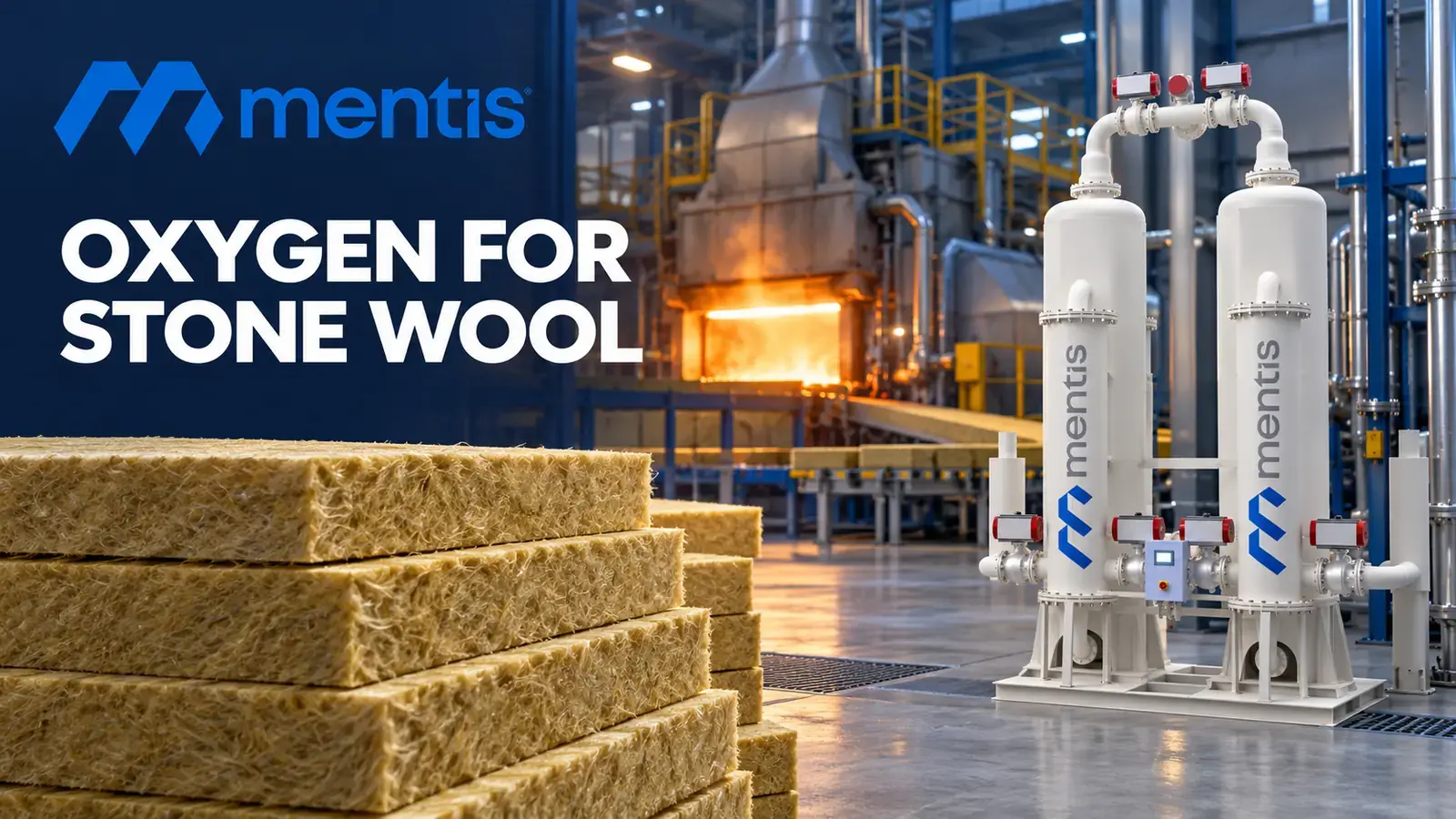
Oxygen can support combustion in suitable stone wool melting processes. The same application does not fit every plant. Select the generator after defining the furnace technology and existing operating conditions; a target gas flow alone is an incomplete basis for investment.
Stone wool is produced by melting mineral raw materials and forming fibres. For suitable combustion systems, melting is the main stage considered for oxygen assistance. Oxygen-supported technologies exist for coke-fired cupolas. An entirely electric melting line cannot be assessed using the same combustion assumptions.
Enriching combustion air changes the gas composition and heat balance in the combustion zone. The outcome depends on the coke or fuel, air supply and furnace design. Oxygen addition should therefore be engineered with the furnace system. It is not simply a matter of connecting extra gas to an existing burner or blast arrangement.
Record melt throughput, raw material mix, fuel consumption, combustion air flow and operating schedule. Track melt temperature and the process properties relevant to fibre formation. The objective is more than a hotter furnace: it is a stable operating condition that maintains the required melt characteristics and finished product quality.
Equal volumetric flows at different gas purities do not deliver equal amounts of oxygen. Specify purity and product gas flow together, using consistent reference temperature and pressure. Define the required pressure at the furnace supply point after allowing for distribution losses, rather than relying only on the generator outlet rating.
On-site oxygen generation should be assessed alongside air preparation, gas analysis, buffer storage and distribution. Develop operating scenarios for changing demand and maintenance. Define how the furnace will respond if gas quality or pressure falls outside its approved range. Generation controls and furnace requirements must be coordinated as part of the project.
Compare fuel use against output and product quality, including the electricity and maintenance required for oxygen production. Measure emissions separately. Oxygen-compatible clean equipment, interlocks and commissioning requirements should be defined with the furnace supplier. Use plant-specific acceptance criteria instead of a fixed saving claim, and compare operation under representative production conditions.
Share your furnace type, melt capacity, fuel and air consumption, required oxygen purity, flow and pressure with Mentis. Request an assessment and technical proposal for on-site oxygen generation and supply infrastructure that can be integrated with the engineering requirements of your existing furnace.