
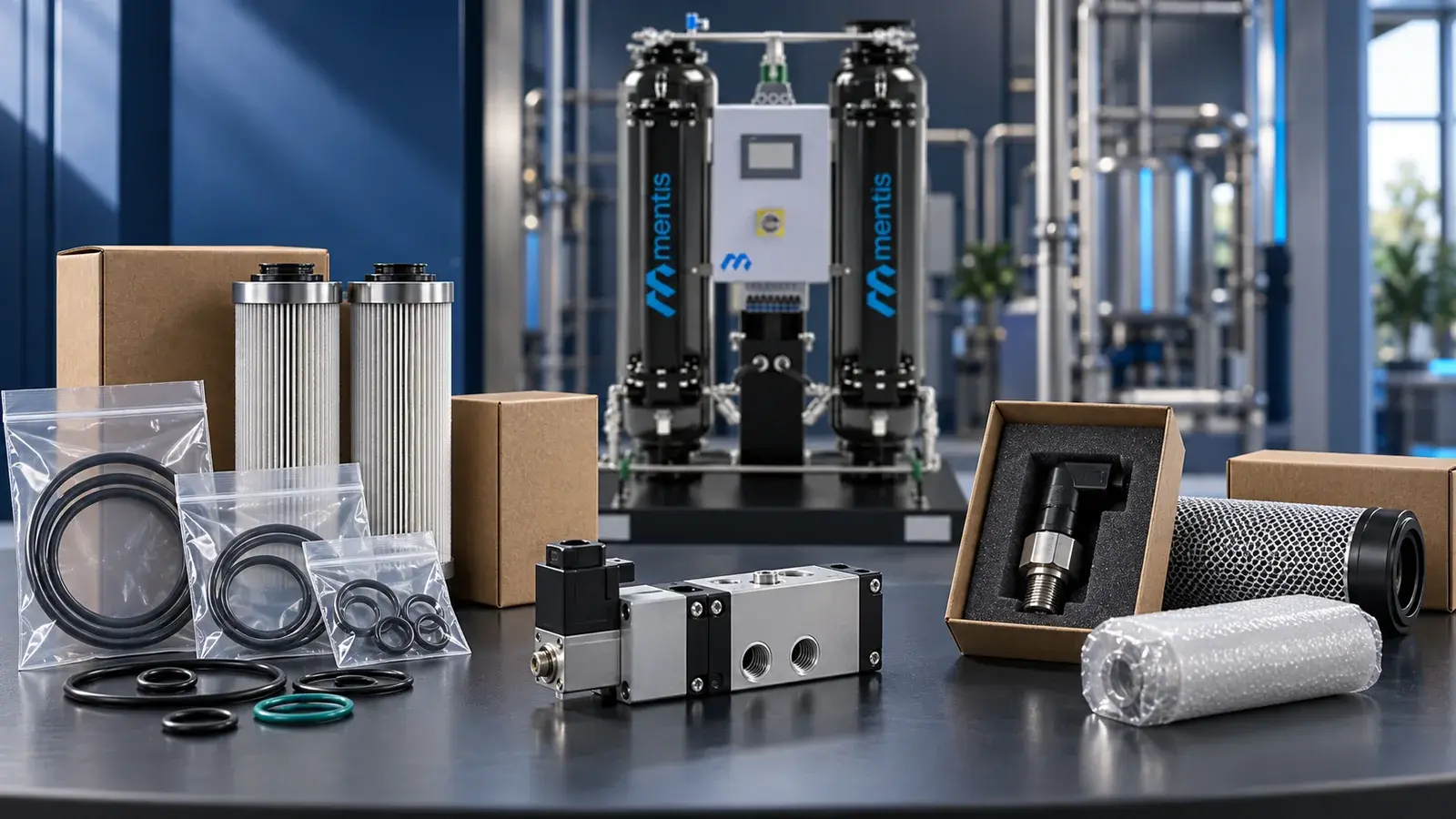
Define what happens if a part fails: complete shutdown, reduced capacity or loss of gas-quality verification. Assess how long backup gas or parallel equipment can support the process. A low-cost sensor or coil can cause a long interruption, while an expensive component may be readily available. Prioritize the list using failure likelihood, consequences and replenishment time.
Record equipment model and serial number, part code, technical revision, quantity and verified supply information for every item. For valves, check connections, sealing materials, pressure rating and coil voltage; for sensors, check range, signal and process compatibility. Similar appearance does not prove interchangeability. A PLC or HMI spare also requires review of software version, licensing and a restorable configuration, alongside hardware compatibility.
Use consumption history and the maintenance schedule for planned filter and seal replacements. For regularly consumed items, the reorder point can be based on expected usage during lead time plus suitable safety stock. Historical averages alone are insufficient for rarely failing critical parts. Check sensor shelf life, elastomer storage requirements and adsorbent packaging integrity against the manufacturer's instructions.
At receipt, verify part code, revision, damage, documentation and expiry information. Quantity on the shelf may differ from quantity ready to install; track quarantine and expiry status separately. Update stock and replenishment needs after each withdrawal. Review the list when equipment revisions, lead times or maintenance findings change. Include post-installation calibration, function and gas-quality checks in the maintenance plan.
Prepare equipment serial numbers, current stock and acceptable downtime for a critical-spares review with Mentis Engineering.