
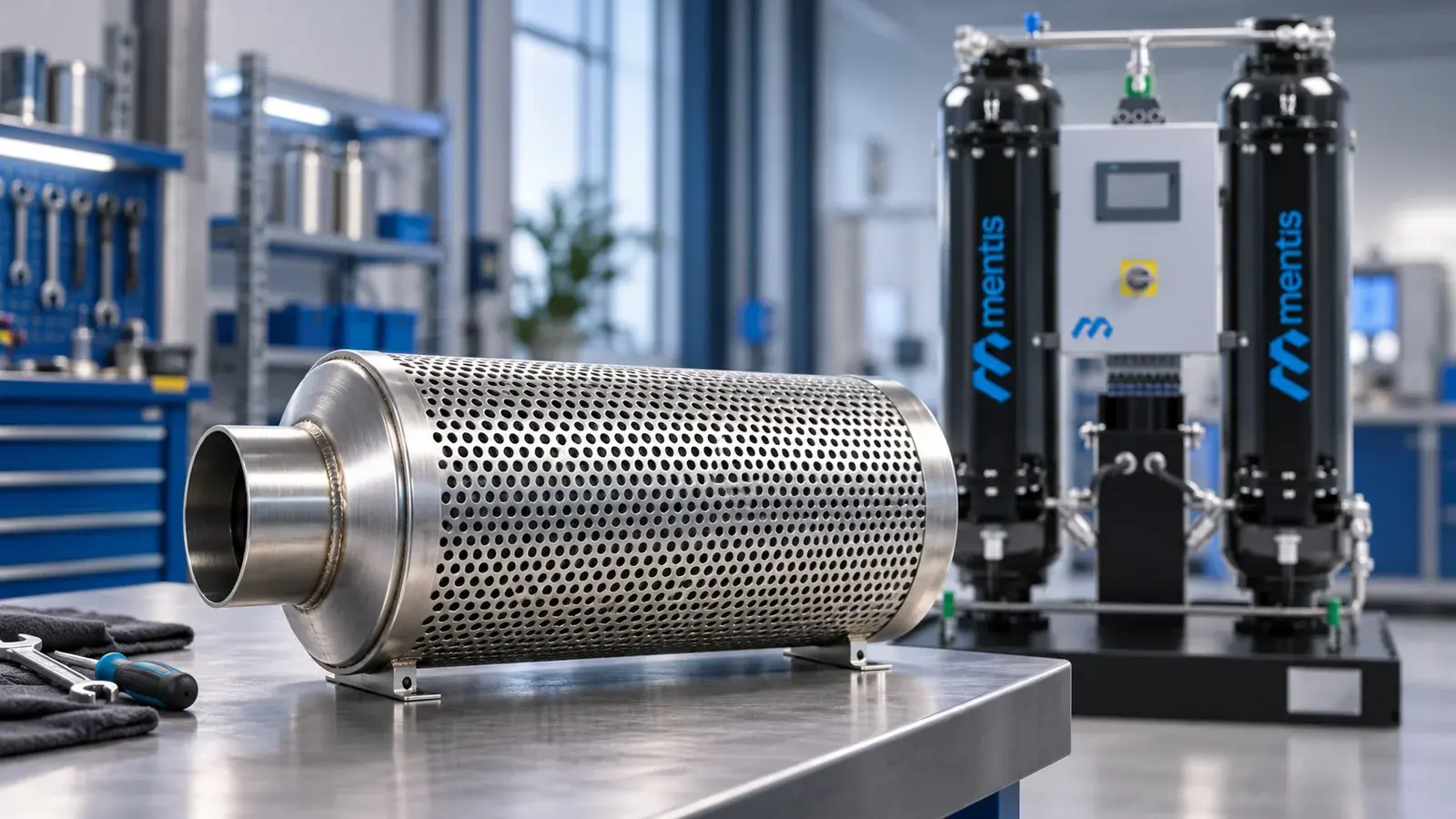
Adsorbent regeneration in a PSA system depends on achieving the intended pressure reduction. An exhaust silencer reduces venting noise while adding flow resistance. A fouled element, restricted outlet or unsuitable exhaust extension can increase back pressure. Failure to depressurize within the intended time can affect gas quality and cycle performance; a purity loss alone does not prove silencer failure.
Start with a healthy cycle under comparable operating conditions. Record each vessel's pressure at the start of venting, pressure decay time, residual pressure at the end of regeneration and valve command timing. Add flow and purity changes to the same timeline. Reduced noise may indicate restriction and increased noise may indicate element damage, but sound cannot replace measurement.
The review should extend beyond the silencer. Service personnel assess the vent valve, pipe restrictions, interactions through a common exhaust and the condition of the outdoor discharge. Measure back pressure at the manufacturer's designated point and relevant part of the cycle. Pressure limits or service intervals from another model cannot be applied directly to Mentis equipment.
Running the system with the silencer removed, drilling the element or disabling protections is not a diagnostic method. Authorized personnel must isolate energy and verify depressurization before following the model's service instructions. After installing the correct part, recheck venting curves, leakage and gas quality. Repeated blockage also warrants assessment of adsorbent dust and earlier maintenance findings.
Prepare the model, serial number and comparable cycle records for a service assessment with Mentis Engineering.