
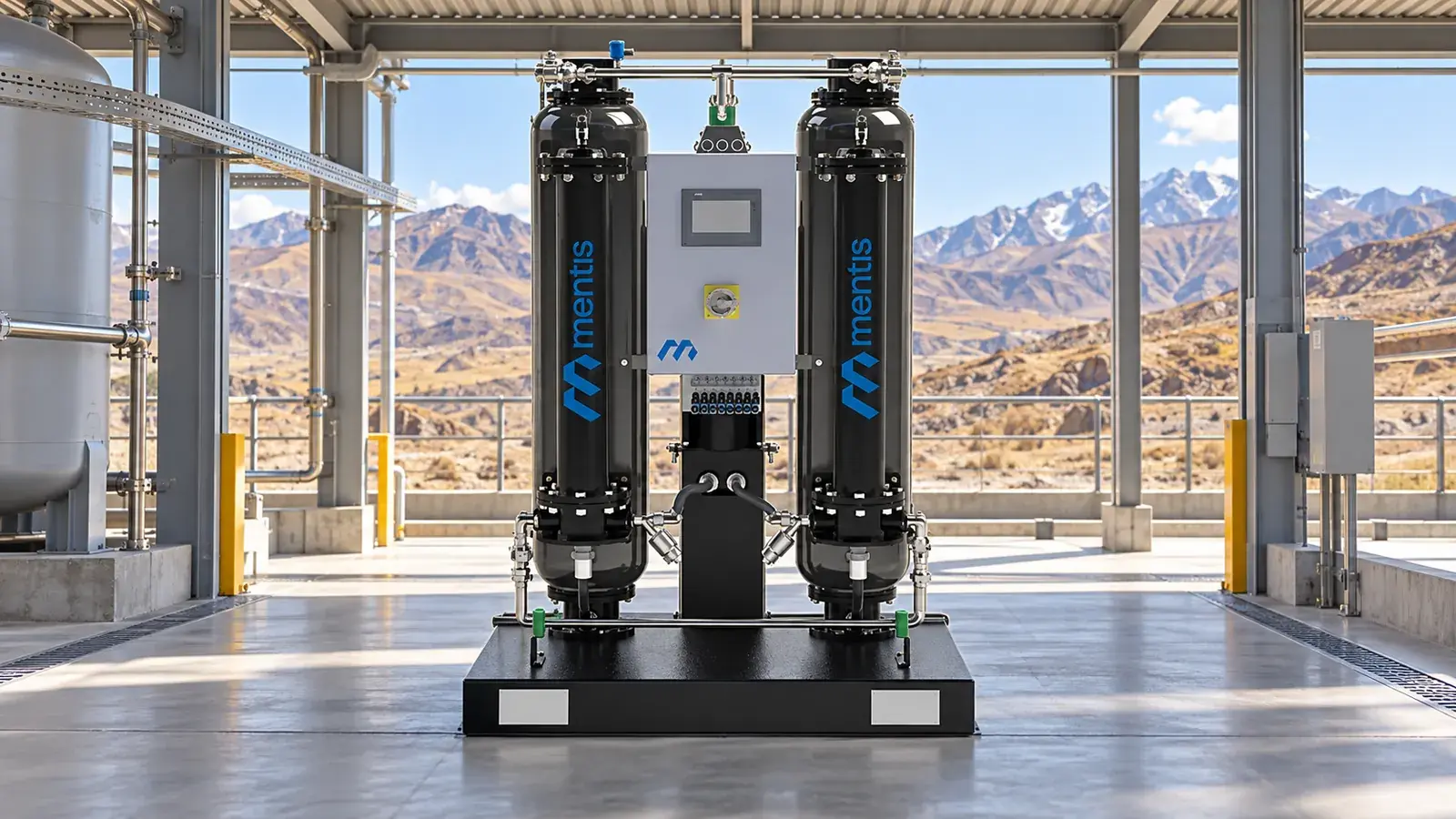
Selecting a PSA oxygen or nitrogen generator for high altitude or a hot climate requires more than nominal gas flow. Every stage, from compressor and dryer to gas generation, must deliver the required flow, purity and pressure under the same site conditions.
Atmospheric pressure decreases with altitude. The oxygen percentage remains approximately unchanged, while air mass per unit volume decreases. This affects compressor air delivery and pressure ratio. Do not confuse gauge and absolute pressure; compressor pressure ratios use absolute pressures.
Outdoor ambient, compressor intake, dryer inlet and PSA inlet temperatures can differ. Assess hot-air recirculation, dirty coolers and insufficient ventilation. Check the altitude and temperature limits of motors, electrical panels and the cooling system.
Nm³/h is not the same as actual site m³/h; state reference temperature and pressure explicitly in quotations. Verify compressor air delivery at site conditions, corrected dryer capacity and PSA output at target purity separately. A percentage reduction in air density is not automatically the generator's capacity reduction.
Provide altitude or local atmospheric pressure, minimum and maximum temperatures, humidity, dust, electrical supply and cooling conditions. Separate continuous and peak gas demand. Performance commitments should define usable gas delivered at these conditions and the limits of auxiliary equipment.
During commissioning, record stable gas flow, purity, pressure, dew point and electrical power together. Agree in advance how to assess results if test conditions differ from design limits. Share site data with Mentis to evaluate the S-PSA system, air treatment and cooling arrangement as one installation.