
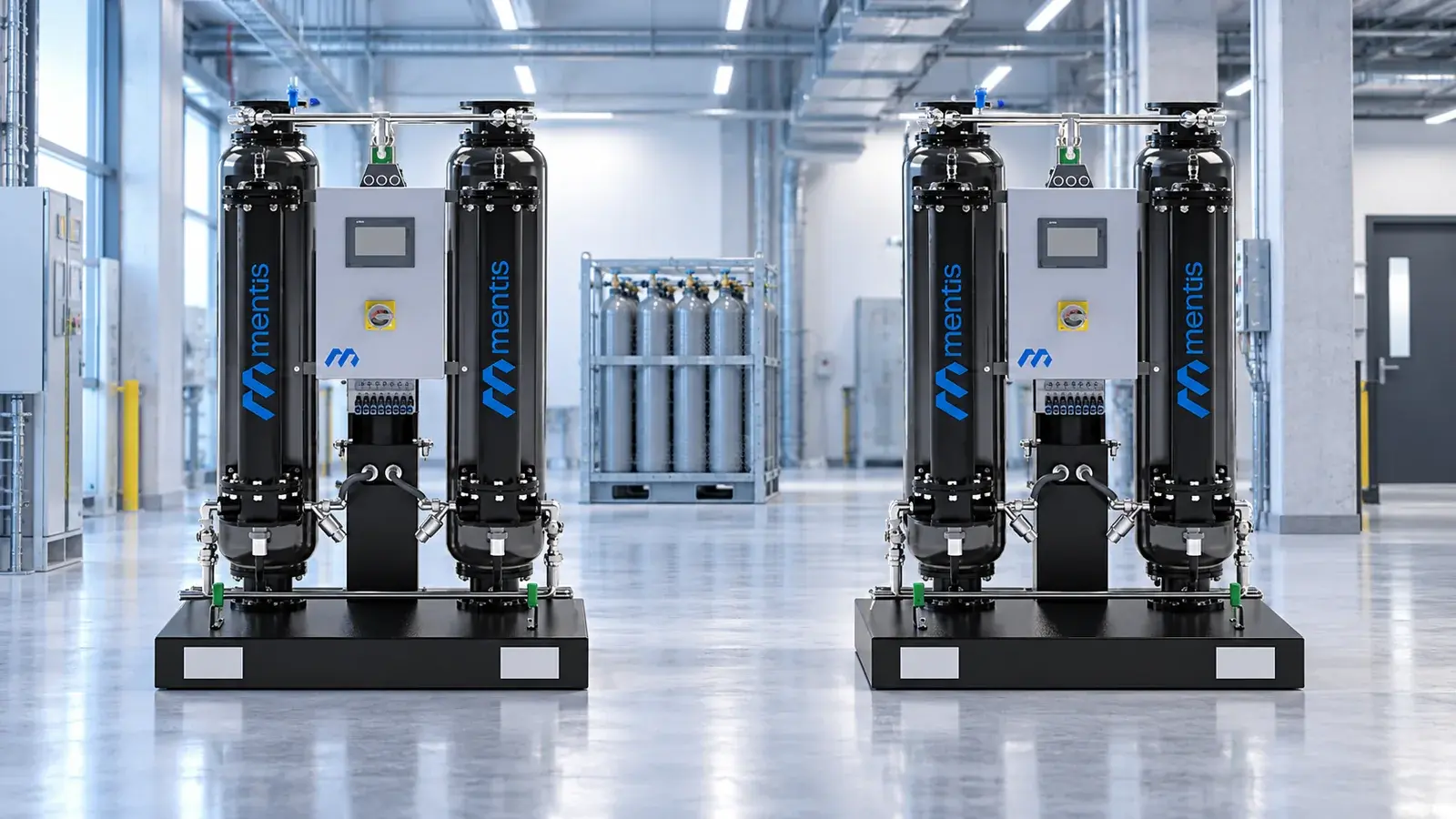
Redundancy in a PSA oxygen or nitrogen plant starts by defining which consumers must remain supplied, for how long and after which failure. An additional generator, receiver and independent reserve source serve different purposes; equipment count alone does not prove continuity.
N is the number of units needed to meet a defined design load; +1 is an additional reserve unit. With one unit unavailable, remaining capacity must meet that load at the required purity and pressure. Two units each rated for 50% of full demand are therefore not N+1 for full load. Account for site conditions in the capacity assessment.
Two generators sharing a compressor, dryer, electrical panel or critical valve can both be affected by its failure. Assess feed air, power, controls, cooling and distribution. State clearly which equipment boundary the N+1 claim covers.
A receiver may bridge short transitions; its usable gas depends on upper and lower pressure limits. Longer interruptions may require cylinder bundles or another suitable source. A preliminary reserve estimate is critical flow multiplied by target duration, using the same reference conditions; account separately for unusable gas and operating margins.
Include low pressure, off-spec purity and power loss in a controlled acceptance plan. Test transition time, regulator capacity, alarm delivery and the return-to-service sequence. Backup gas must also meet the process quality requirements.
Monitor gas inventory, replenishment lead time, valve status and maintenance. Medical applications additionally require the source arrangement to be assessed against applicable technical specifications by qualified project specialists. Share critical flow, acceptable interruption time and existing infrastructure with Mentis to plan a suitable S-PSA backup arrangement.