
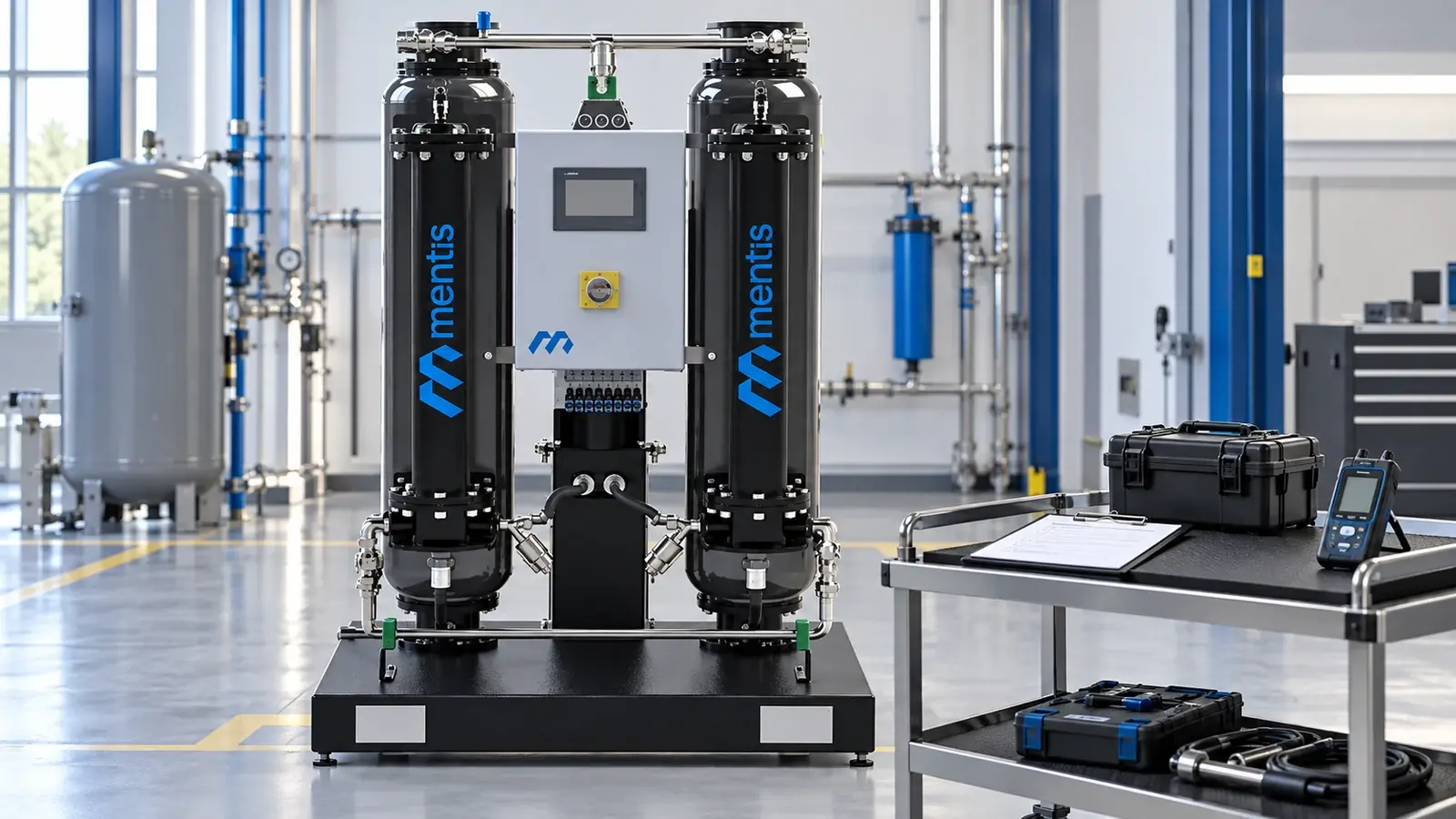
Acceptance of a PSA oxygen or nitrogen plant verifies specified performance and functions through documented evidence. FAT takes place before shipment at the factory; SAT follows installation on site. Agree scope and limits before the project proceeds.
Specify gas type, product purity, usable flow, delivery pressure and any moisture limit at the same operating point. State normal-volume reference conditions, measurement locations, test duration and acceptance tolerances. Instrument ranges, verification status and measurement uncertainty must support the assessment.
Check models, serial numbers, the equipment list, connections against the P&ID, valve directions and electrical documentation. Record purity, flow and pressure simultaneously under defined conditions. Assess start, stop, tower switching, low feed pressure and off-specification purity responses through an agreed procedure. Clearly distinguish simulated steps from actual performance tests.
Check electrical supply, ventilation, inlet air quality, drains, site pipework and process interfaces. Observe delivery pressure, purity stability and alarm transmission as actual demand changes. Where factory conditions differ from site conditions, document the limits of comparison; FAT alone does not establish site performance.
Include measurement logs, instrument documents, software version, alarm list, training and maintenance documents. Assign an owner and closure date to outstanding items. Qualified personnel must conduct pressure and electrical testing without disabling protective functions. Share the project specification with Mentis to plan an appropriate FAT and SAT scope for your plant.