
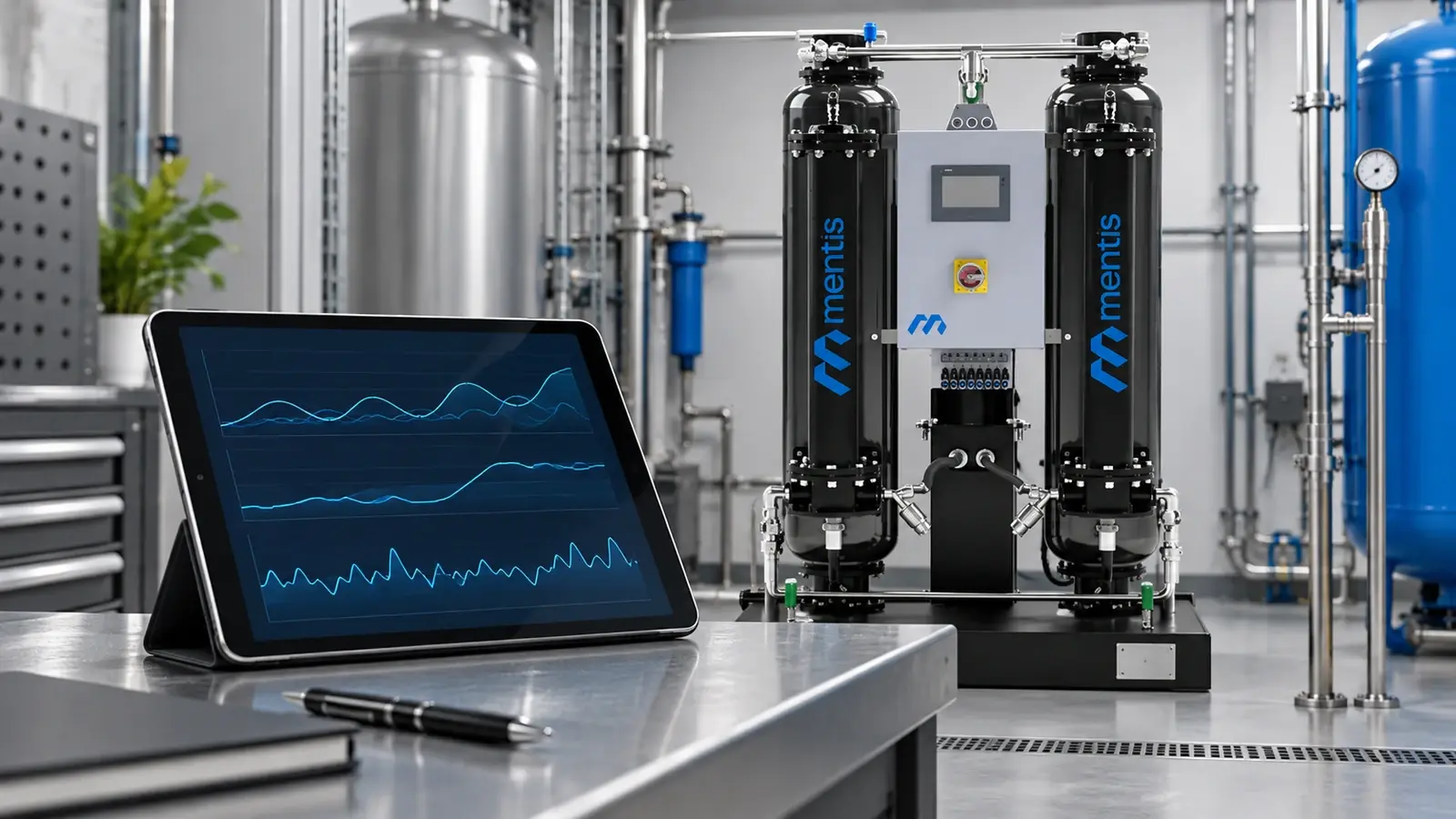
A PSA monitoring plan should begin with the decision it supports: purity fluctuations, pressure loss or unplanned shutdown? Software does not create a measurement where no sensor exists. Confirm installed sensors, controller connections and logging options for the specific Mentis project.
Log feed-air pressure and temperature, dew point where measured, and product-gas pressure, flow and purity or residual oxygen together. Identify the measurement location, unit, sensor range and flow reference conditions. Correlate running, standby and fault states with tower pressures, cycle steps and valve feedback where available. A valve command is not the same as actual position feedback.
Distinguish the measurement timestamp from the server arrival time. Synchronise clocks, define the time zone and mark communication outages. Presenting an old reading as current can mislead diagnosis. Slow averages may miss fast cycle events; choose sampling and archiving intervals for the process dynamics and diagnostic need. Missing or invalid readings must not be interpreted as zero consumption.
Keep alarm occurrence, acknowledgement and clearance times separate. Save trends covering the period before and after the event, together with setpoints, maintenance notes and relevant production load. Agree retention, backup and export format at the outset. Remote monitoring does not replace local protective functions; remote command authority needs a separate assessment and controlled access.
Match your sensor list to service needs with Mentis Engineering to define a practical PSA monitoring and logging plan.