
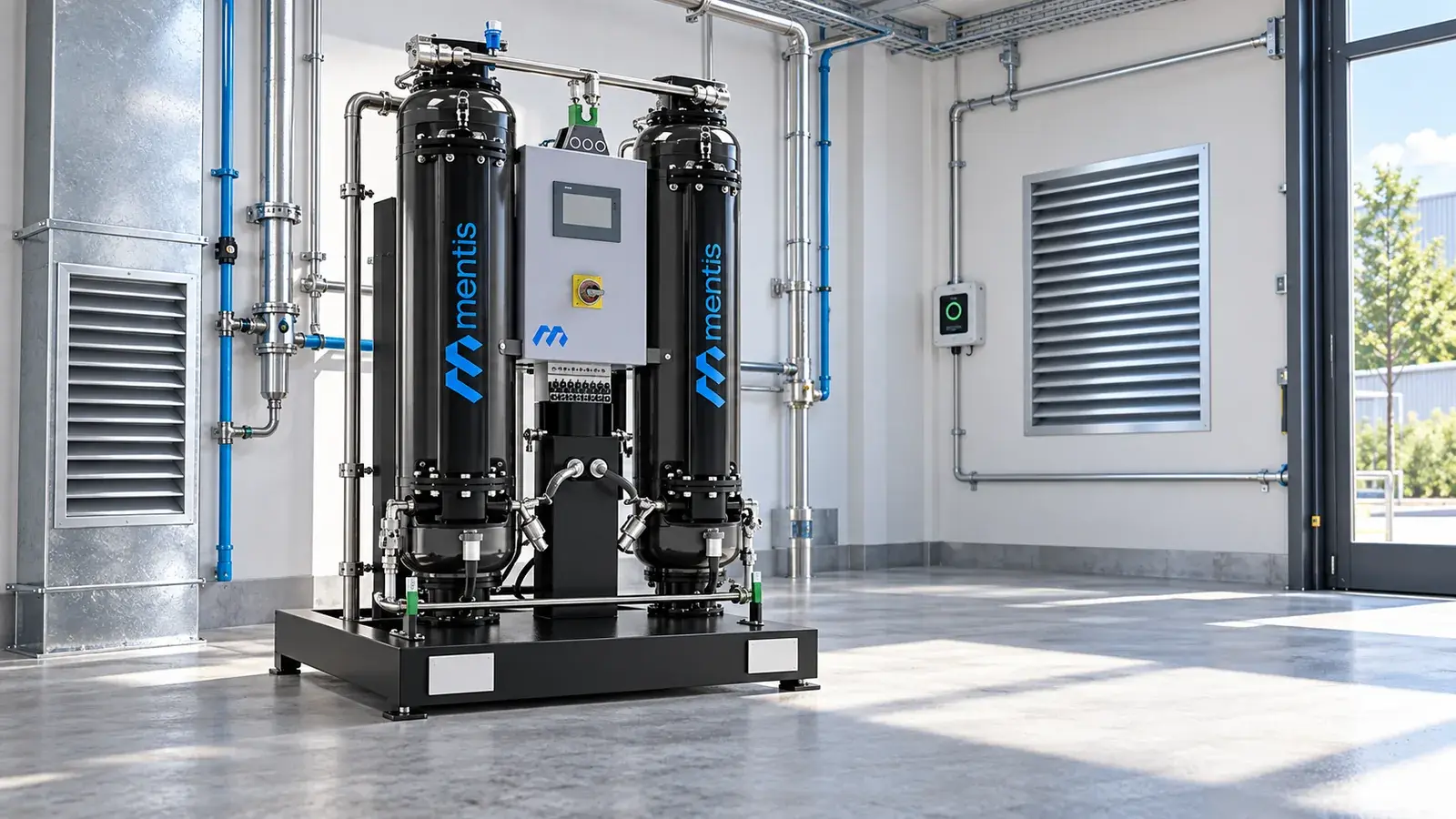
PSA room ventilation must remove equipment heat and manage possible gas releases. Nitrogen releases can lower ambient oxygen; oxygen releases can intensify combustion. Exhaust composition also differs between oxygen and nitrogen PSA systems. Smell cannot reliably warn personnel of these gases.
Assess room volume, routine vents, credible leak flows, equipment heat load and air inlet/outlet locations together. A single air-change rate is not proof of suitability for every plant. Route gas vents to a safe location away from air intakes and occupied areas, while respecting the manufacturer's allowable backpressure. A fan-running signal alone does not prove adequate airflow.
An analyser measuring product gas purity does not replace a monitor for the occupied atmosphere. Select fixed sensor positions using release points, air movement, access areas and manufacturer instructions. Define alarm thresholds, maintenance and functional testing through the project risk assessment; instrument faults and ventilation loss must also be visible.
Record measured ventilation flow, alarm visibility inside and at the entrance, notification to responsible personnel and the safe shutdown sequence specified for the project. If the room alarm activates, leave the area and follow the site's emergency plan; do not attempt an unprotected rescue. Re-entry requires assessment by authorised personnel.
Review your PSA layout with Mentis Engineering using the room plan, gas vent locations and ventilation data together.