
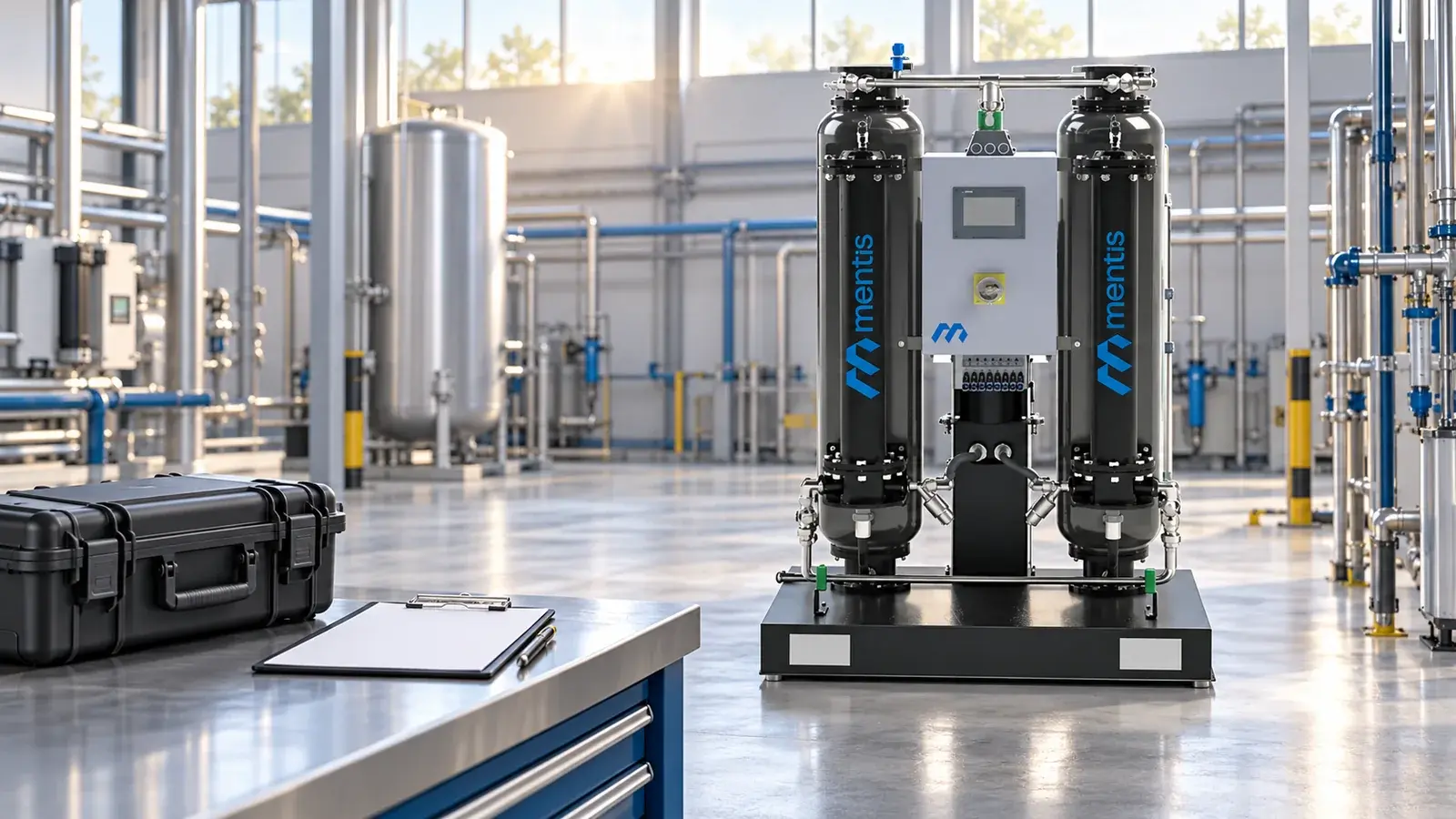
Restarting a PSA system after extended downtime involves more than pressing Start. Preservation conditions, maintenance work and the condition of the gas network determine the restart plan.
Record the duration, reason, storage conditions and whether piping was opened. Review maintenance records for electrical, valve or adsorbent work. A short standby and a fully depressurized or relocated system do not have the same initial conditions.
Assess the compressor, cooling, dryer, filters and condensate drains according to their manufacturers' instructions. Resolve suspected oil or water carryover before feeding the PSA. Ventilation, exhaust routing and ambient oxygen monitoring where installed must be operational. An adsorbent's dry appearance alone does not establish its suitability.
Qualified personnel should follow the model-specific startup sequence and valve positions. Use the prescribed controlled transition rather than filling an empty network with a sudden high flow. There is no universal valve-opening sequence or waiting period. Do not release production if leaks, unusual noise or alarms occur.
Confirm that the analyzer is ready and verified; record stable compliance with product purity, pressure and required moisture criteria. Route off-specification startup gas through the designed safe vent system. Also consider residual gas in the receiver and distribution line. Do not bypass protective functions. Share the model, shutdown history and maintenance details with Mentis to plan the restart scope.