
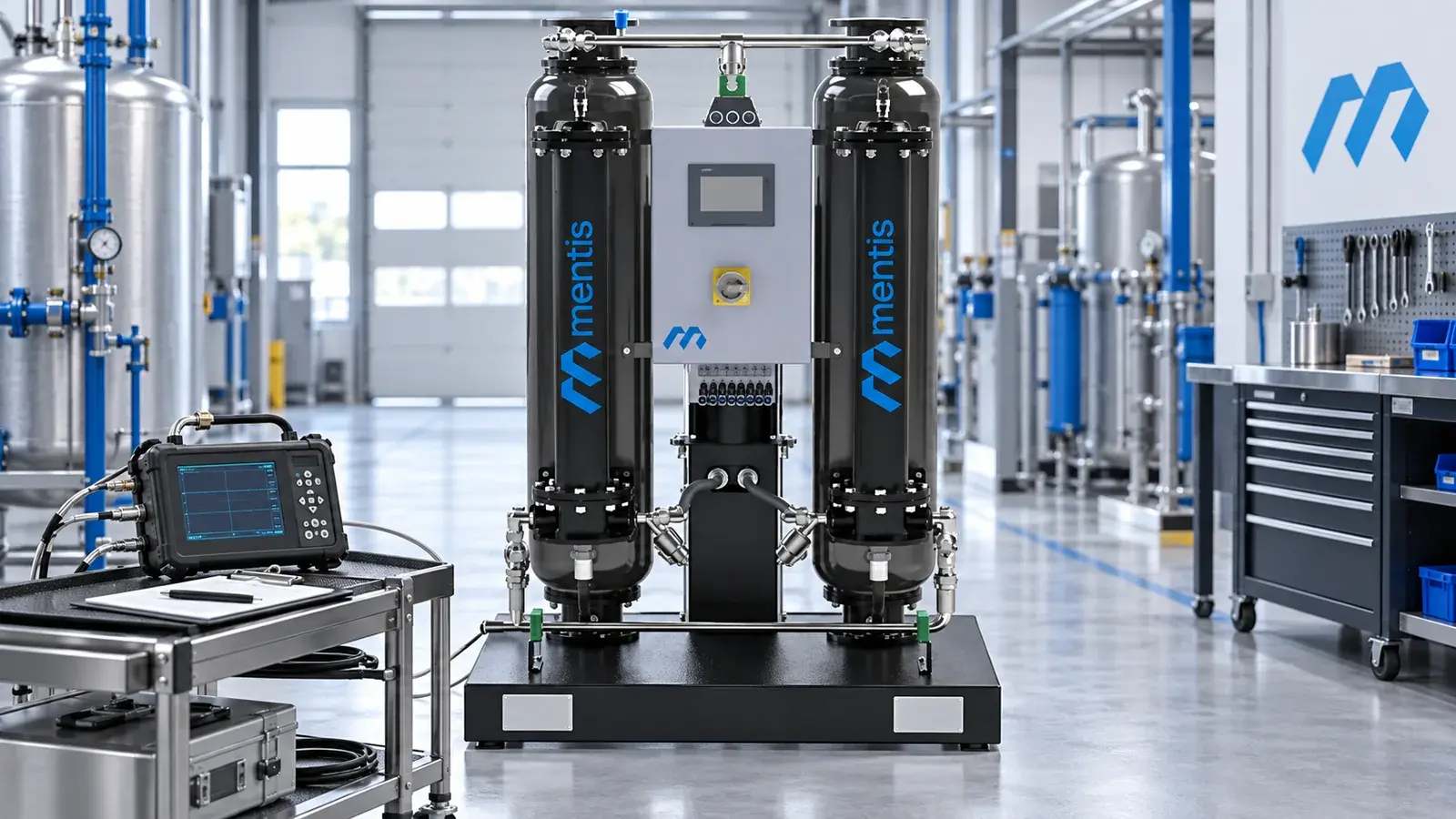
Internal leakage in a PSA system means gas passes through a valve that should be closed. It may be inaudible, and a change in capacity or purity alone cannot identify the leaking valve.
Record both tower pressures, inlet pressure, product flow and purity on a common timeline. Match adsorption, depressurization and any equalization steps to the manufacturer's sequence. Normal equalization flow is not a leak; a previous healthy operating record is a useful baseline.
A closed command on the PLC display does not prove tight mechanical closure. Qualified service personnel should assess pilot-air pressure, solenoid operation, actuator response and position feedback where fitted. Slow pressurization or incomplete depressurization can also result from other flow restrictions.
Unstable inlet pressure, a restricted exhaust silencer, excessive product demand and instrument error can create similar pressure traces. Pressure changes during shutdown may reflect temperature or connected volumes. Confirm internal leakage with the model-specific isolation and tightness test; avoid a universal pressure-decay limit.
Provide the model, serial number, alarm timestamps, several complete cycles and recent maintenance history. Do not dismantle pressurized components, obstruct exhausts or force valves manually. Qualified personnel must verify energy isolation and depressurization of all relevant volumes before intervention. Share the records with Mentis to identify the components requiring inspection.