
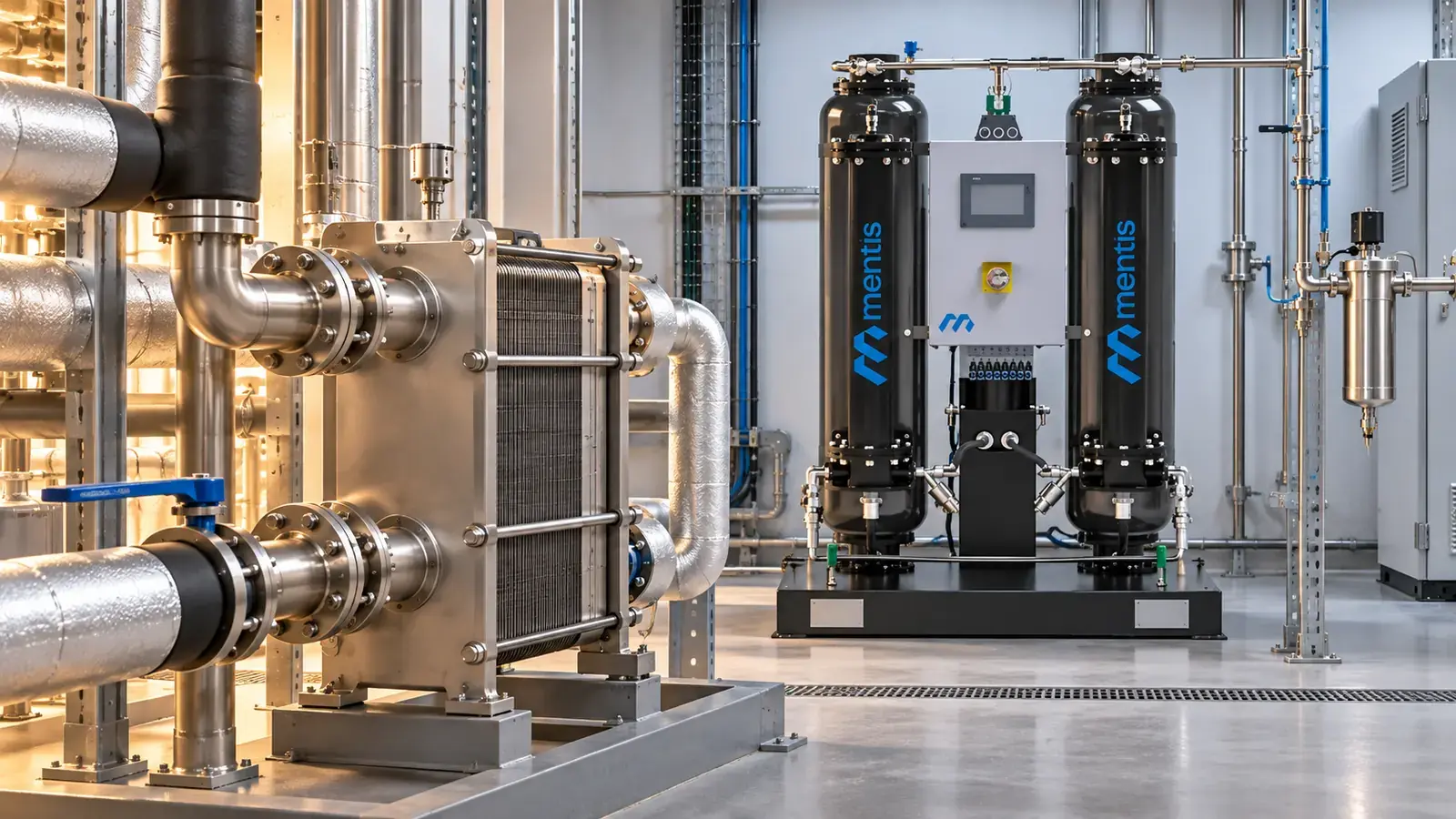
The compressor feeding a PSA plant releases substantial heat while operating. A suitable recovery system can transfer part of it to another demand as warm air or hot water. This does not mean compressor electricity consumption falls by the same proportion. The benefit is the reduction in energy that another heat source would genuinely have supplied.
Compare compressor loading and the process hot-water or heating demand on the same timeline. Record required inlet/outlet temperatures, flow, pipe distance, seasonal use and the existing heat source. Motor nameplate power alone cannot establish annual recovery. Heat produced when there is no demand is not a saving unless suitable storage and later use are available.
For a water loop, approximate thermal power is Q̇ = ṁ × cp × ΔT. With mass flow in kg/s, specific heat in kJ/(kg·K) and temperature difference in K, the result is kW. Annual useful energy is usable thermal power integrated over time. For example, a measured 40 kW of useful heat used for 3,000 hours of coincident demand gives 120,000 kWh of thermal energy; this is not a guarantee for a Mentis model.
Normal compressor cooling must continue when heat demand stops. Review the exchanger, pumps, fans, controls and pressure losses with the manufacturer; keep gas and water circuits separate. Deduct additional electricity and maintenance costs from the benefit. Account for the existing boiler efficiency or heat-pump performance when comparing options; payback depends on this net benefit.
Review compressor operating records and your site's heat-demand profile together with Mentis Engineering when assessing PSA plant energy use.