
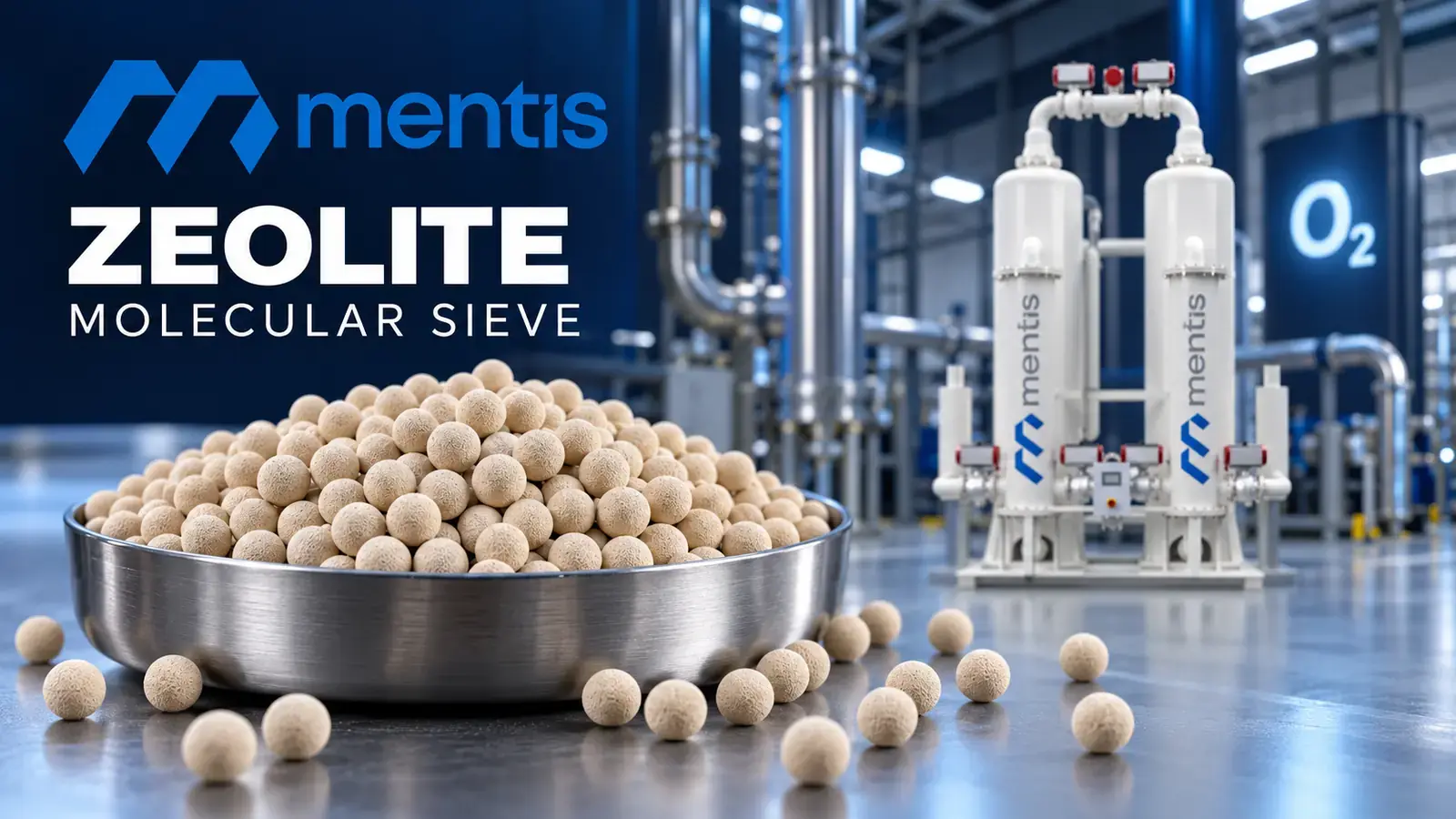
The small beads inside an oxygen generator have a major influence on its performance. Zeolite is a crystalline aluminosilicate with an ordered network of pores. Suitable grades selectively adsorb particular molecules, making them valuable molecular sieves for gas separation, drying and purification.
Molecular sieve is a broader term for materials that separate molecules through pore dimensions and adsorption behaviour. Zeolites are an important part of this family; carbon molecular sieves are a different material. Natural zeolite and a synthetic oxygen-generation grade cannot simply be substituted for each other. [1]
Industrial synthetic zeolites are made from silicon and aluminium sources in an alkaline medium. Controlled hydrothermal crystallisation develops the pore structure. The crystals are washed, may undergo application-specific ion exchange, are formed into beads or pellets and are activated. Crystal type, binder and exchangeable cations influence the finished adsorbent. [2]
Oxygen-generation zeolite preferentially adsorbs nitrogen from compressed air, allowing an oxygen-rich stream to leave the bed. Depressurisation, or vacuum in an appropriate process, releases the retained nitrogen. Alternating beds sustain production. This separation depends on selective interactions with the zeolite surface, rather than a simple comparison of molecular sizes. [3]
Applications include on-site oxygen generation, industrial gas drying, air-separation pretreatment and the removal of water or carbon dioxide using suitable grades. Generated oxygen can serve aquaculture, wastewater treatment and industrial processes. Other zeolite formulations act as catalysts in petroleum refining and petrochemicals; these grades serve different duties. [4] [5]
Consider more than the price per kilogram. Required oxygen purity and flow, operating pressure, feed temperature, particle size, attrition resistance and compatibility with the PSA cycle all matter. Capacity figures measured under different conditions are not directly comparable. Request a certificate of analysis, batch traceability and performance data relevant to your operating conditions.
Calendar age alone is insufficient. If purity falls, capacity declines or dust appears, first check the filters, dryer, valves and analyser. Oil contamination and excessive moisture can compromise the bed. Normal PSA regeneration does not automatically restore contaminated or physically damaged zeolite. A condition assessment helps identify the actual cause before replacement.
Contact Mentis to discuss a new PSA oxygen generator or assess an existing installation. Share your required purity, consumption profile, operating pressure and equipment details. Together, we can evaluate the adsorbent, feed-air treatment and generator design as parts of one operating system. [Mentis]