
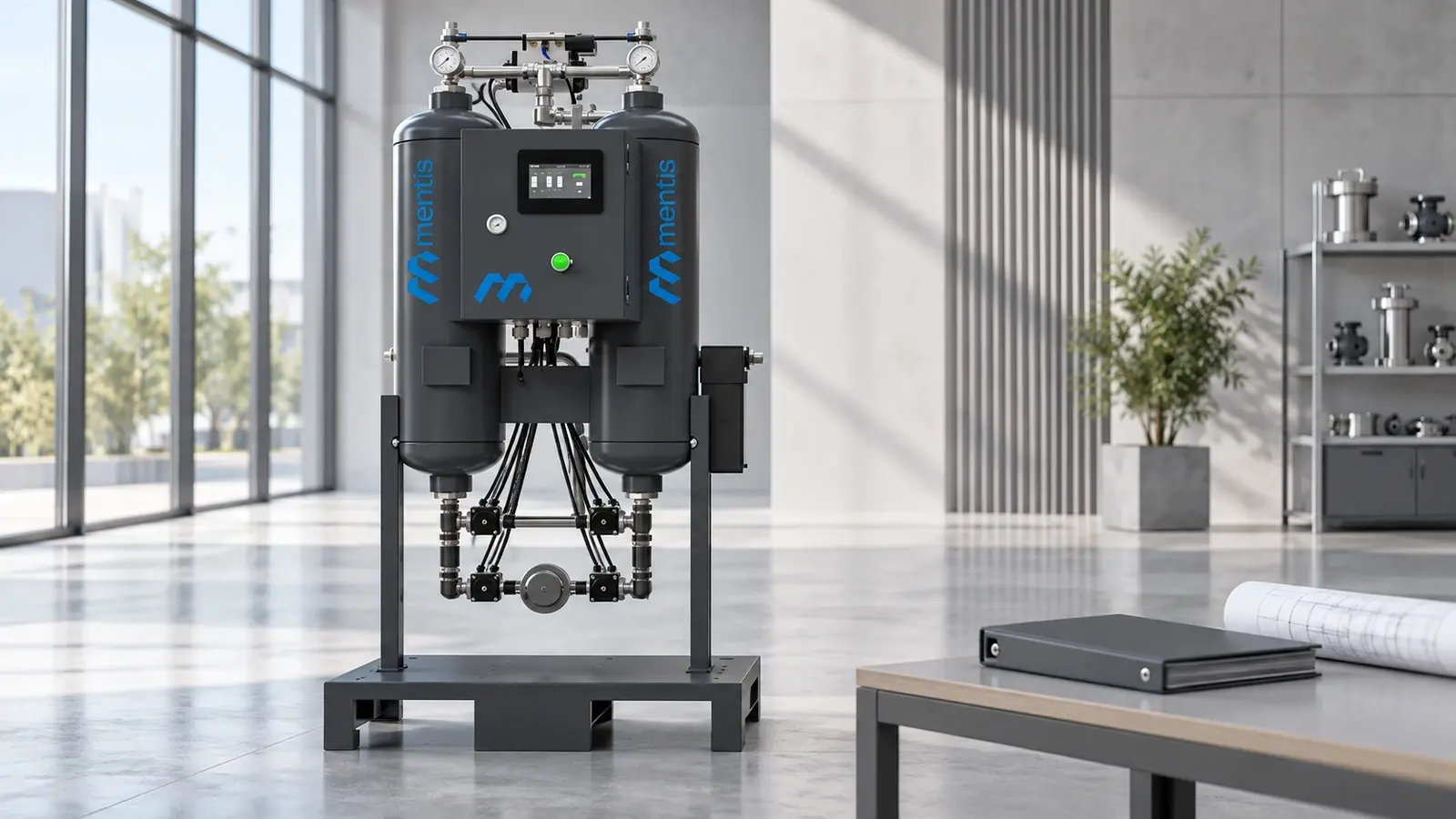
In industrial compressed air, a desiccant dryer removes water vapour by adsorption; the term chemical dryer is also used in some markets. A useful quotation states the conditions under which the equipment will deliver the required dry air. Two prices are not directly comparable unless capacity, quality and scope use the same basis.
Specify the reference temperature and pressure for flow, the dryer inlet flow and the net flow available to production. These differ when regeneration consumes compressed air. Consider minimum operating pressure, maximum inlet temperature and simultaneous demand. Compressor motor power alone is not enough to select a dryer model.
State the pressure dew point target together with operating pressure. Evaluate nominal capacity using the manufacturer's correction data for actual site conditions. Include the separator, drains, prefilters and afterfilters in the scope. A moisture specification does not remove the need to define oil and particle limits separately.
Account for the compressor energy needed to supply regeneration air, any heater or blower consumption, total pressure drop and maintenance consumables. Annual operating hours and variable demand are necessary for a useful cost comparison. Clarify electrical supply, commissioning, measuring instruments and maintenance access before ordering.
Provide the application, net air demand, pressure range, maximum inlet temperature, required pressure dew point and daily operating profile. Add existing compressor and filter details and available installation space. Agree on the flow and operating conditions for acceptance measurements before purchase.
Share these inputs with Mentis Engineering for a desiccant dryer quotation that brings capacity, equipment scope and operating conditions onto one clear technical basis.