
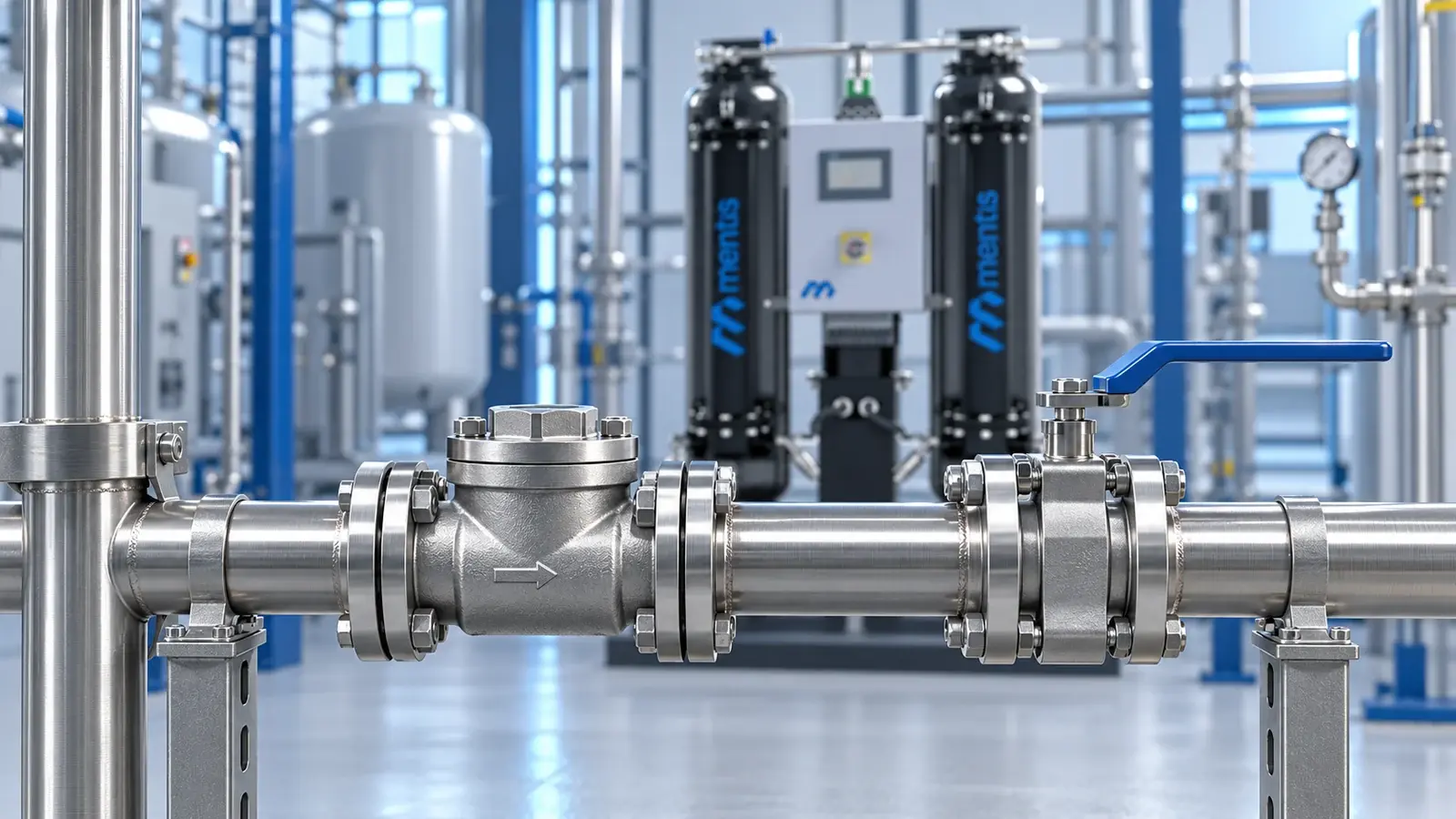
If process pressure exceeds supply-line pressure, gas or process fluid can move toward the source. Generator shutdown, falling supply pressure, vessel pressurisation and multiple sources connected to a common header can create this condition. The consequence is not merely lost gas: moisture, oil, liquid or another gas can affect the adsorbent, analyser and product quality.
A check valve is designed to prevent reverse flow, but contamination, wear, incorrect installation and unsuitable closing conditions can impair performance. Cracking pressure and closing behaviour are not the same specification. Do not assume a pressure regulator inherently provides backflow protection. A standard check valve is not a substitute for verified maintenance isolation or required flashback protection.
Identify gas type, maximum reverse pressure, temperature, flow range and potential process contaminants. Oxygen service requires separate assessment of material compatibility and cleanliness for all relevant components. Consequences may justify independent isolation, pressure monitoring, automatic shutoff or an appropriate separation arrangement. Two check valves in series do not by themselves demonstrate adequate safety; the responsible engineer must define the solution.
Make flow direction, test access, safe discharge and manufacturer maintenance instructions clear in the design. Document valve states following loss of power or instrument air and the conditions for restart. Select reverse-leak test methods, pressures and acceptance limits according to the manufacturer. Do not open pressurised connections; verify approved isolation and depressurisation before intervention.
Assess pressure scenarios at the gas-source/process boundary with Mentis Engineering and develop backflow protection around the plant's actual risks.