
Dry air contains approximately 20.9% oxygen; most of the remainder is nitrogen, which does not act as fuel. Replacing part of the combustion air with oxygen-rich gas can meet the same oxygen demand while introducing less nitrogen. With suitable design, this can reduce heat carried away in flue gas and improve flame behaviour and heat transfer. Oxygen supports fuel combustion; it is not a fuel. Air enrichment and full oxy-fuel combustion are different project scopes.
The objective is stable burning and acceptable clinker quality, rather than a hotter flame alone. Oxygen assistance may be evaluated when alternative fuel moisture, lower heating value or particle size creates combustion difficulties. Main burner or calciner applications require assessment against the existing heat balance and equipment limits. Additional oxygen cannot resolve every bottleneck caused by fan capacity, material movement or heat transfer.
Lime kilns require attention to burning degree and product reactivity. Glass melting requires melt quality and furnace life to be protected; suitable metal heating applications also depend on surface oxidation and temperature distribution. Burners, refractories and heat recovery arrangements differ between plants. Fuel or capacity benefits achieved at one installation cannot be transferred directly to another; establish savings from site data.
Compare before-and-after operation at the same product quality and comparable load and fuel conditions. For cement, assess thermal energy per tonne of clinker, such as GJ/t clinker, rather than fuel kilograms per hour alone. Record output, fuel moisture and heating value, alternative fuel thermal share, oxygen consumption, total electricity, flue gas O₂/CO/NOx and temperatures. Report production increases separately from reductions in specific energy consumption.
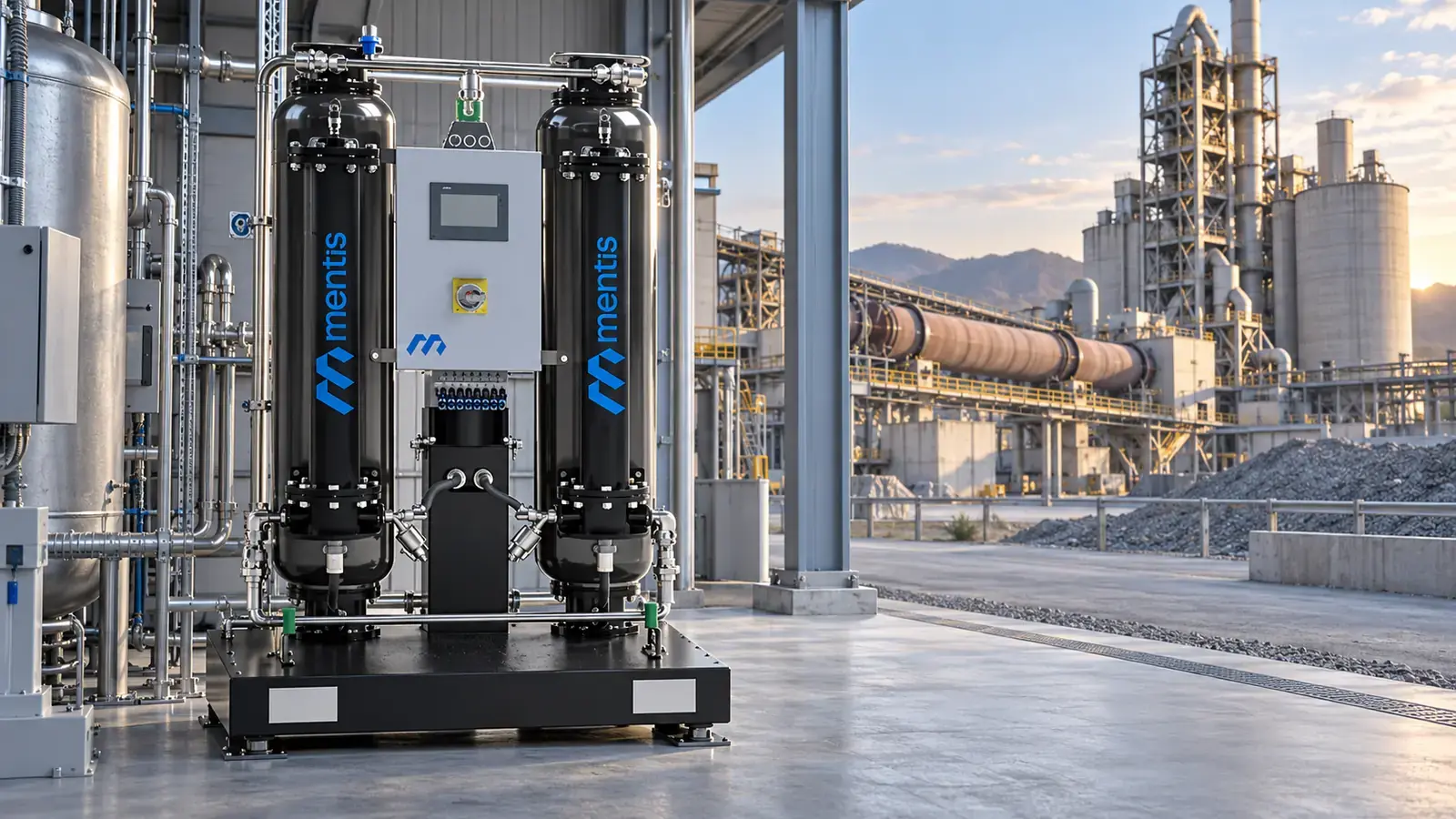
Required oxygen flow and purity follow the fuel consumption and process oxygen balance; no single specification suits every kiln. At the same gas volume, a lower oxygen concentration carries less O₂. When evaluating a Mentis PSA solution, define actual capacity at target purity, delivery pressure, load changes, ambient conditions, maintenance and backup together. Alternative generation and supply methods should also be compared for large demands.
Separate fuel cost reductions at comparable production from the contribution margin of additional saleable output. Deduct oxygen generation or purchase costs and other incremental operating expenses. Avoid counting electricity, maintenance or pressure boosting twice when already included in oxygen cost. Budget for injection equipment, analysis, automation and integration alongside the oxygen plant. Where net benefit is positive, calculate payback against the complete investment.
Oxygen assistance alone does not guarantee lower CO₂ or NOx emissions. Cement process CO₂ from limestone calcination is not eliminated simply by improving combustion. Monitor emissions and refractory temperatures during site trials. Clean oxygen-compatible components, flow and pressure control, flame supervision and safe shutdown interlocks must be engineered with the burner or kiln manufacturer. Do not introduce oxygen into an existing line without the required controls.
Assess oxygen assistance for your cement, lime or high-temperature process with Mentis Engineering. Share kiln type, fuel and hourly consumption, moisture and heating value, output, annual operating hours and energy costs to request preliminary oxygen system selection and a data-based feasibility assessment.