
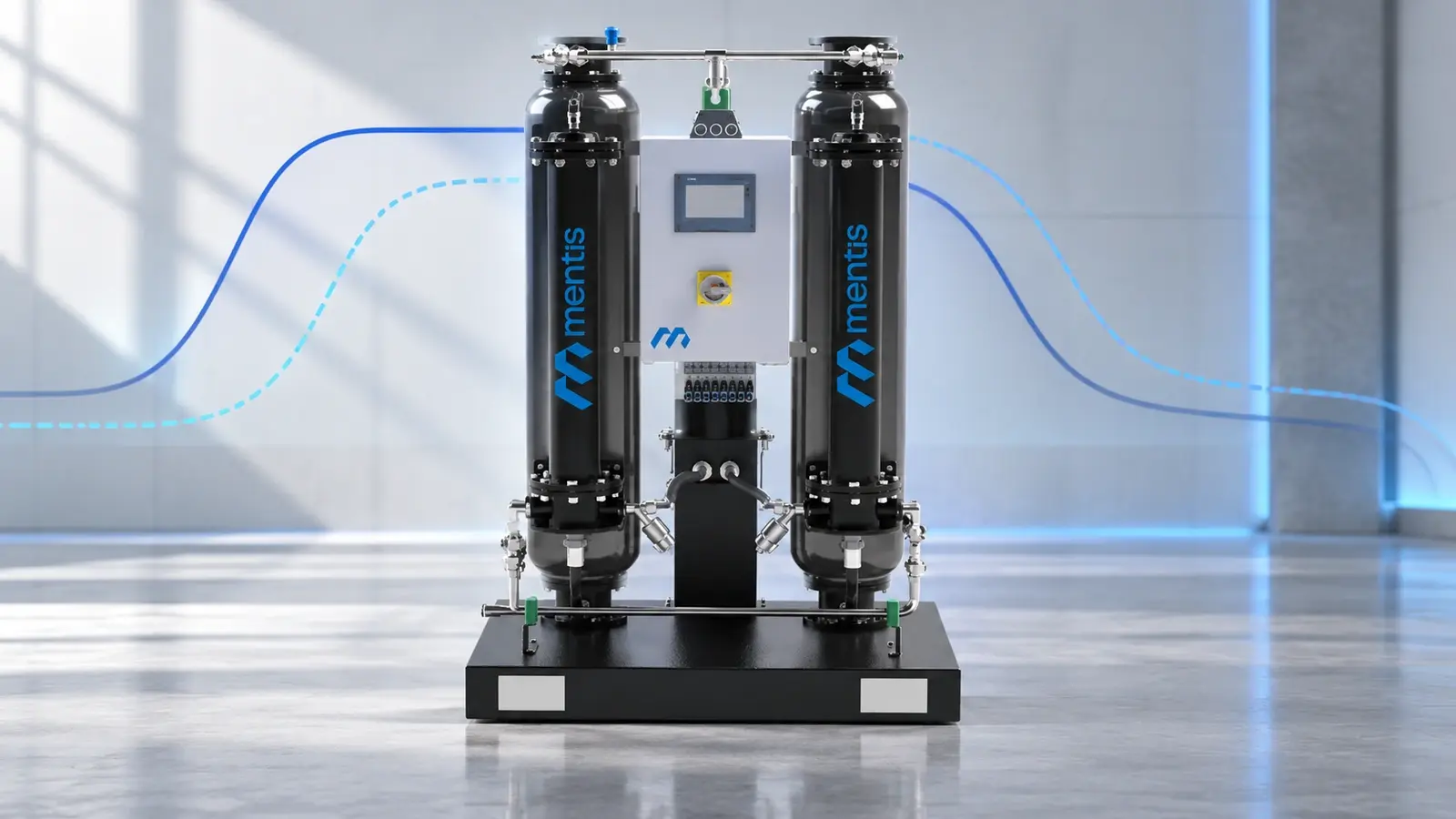
In oxygen PSA, compressed air passes through an adsorbent bed that retains nitrogen and produces oxygen-enriched gas. Lowering the pressure regenerates the bed. VPSA uses adsorption above atmospheric pressure and regeneration under vacuum. VSA terminology is also used; because suppliers may use these names differently, the actual pressure cycle should be stated in the proposal.
Energy figures are not comparable without matching purity, net flow and delivery pressure. If low-pressure oxygen requires further compression, include the consumption of an oxygen-service compressor or booster. Identify the air compressor, blower, vacuum pump, cooling equipment and other auxiliary loads according to the actual supply scope.
Vacuum-assisted solutions merit evaluation for large, continuous demand, but no single flow threshold applies to every project. Part-load efficiency, daily shutdowns, ambient conditions, available space, maintenance capability and backup requirements can change the outcome. Check the capacity effect of higher purity and the delivered gas moisture specification against supplier data.
Record minimum, average and peak hourly demand, operating schedule, required point-of-use pressure and acceptable purity and contaminant limits. Request net capacity, total electrical demand, part-load behaviour and maintenance scope at identical conditions. Compare annual consumption using the actual load profile. The lowest generator nameplate power does not necessarily mean the lowest overall operating cost.
Work with Mentis Engineering to assess oxygen demand and site conditions and define the generation and compression scope suitable for your project.