
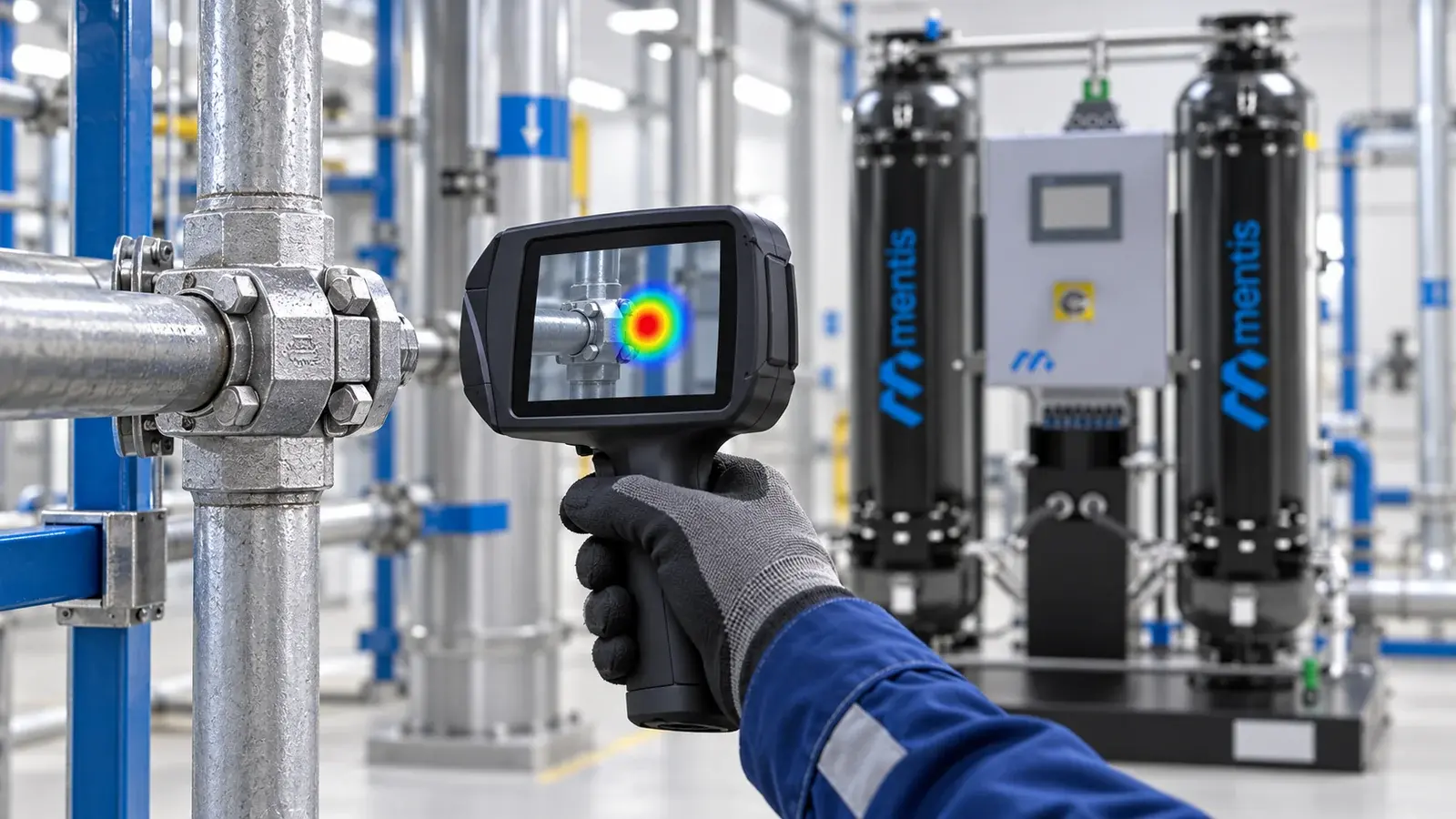
Air escaping across a pressure difference can produce high-frequency sound through turbulence. An ultrasonic detector or acoustic camera uses this signal to locate the source. The signal alone is not an exact leak-flow measurement: distance, viewing angle, line pressure, reflections and nearby sources affect the result. If the instrument estimates flow, document the method and uncertainty.
Divide the plant into zones and define accessible routes covering joints, hoses, quick couplings and points of use. Give every finding an identifier, photograph, location, operating pressure, instrument setting and date. Do not confuse intended PSA exhaust or dryer regeneration discharge with a faulty leak. Record the operating state of the equipment during inspection.
Assess estimated air loss, annual pressurised hours, production impact, access and repair cost together. A louder signal does not automatically identify the most valuable repair. Never tighten or dismantle a pressurised connection during a survey. Qualified personnel should intervene under the site's isolation, lockout and depressurisation procedures.
Resurvey the repaired point under similar pressure and measurement conditions, match the original record and formally close it. Where practical, check total effects using air-consumption and compressor electricity measurements at comparable production loads. Reduced leak flow does not translate one-for-one into electrical savings: compressor controls and unloaded operation influence the outcome.
Review leak records with Mentis Engineering alongside air-treatment and PSA supply requirements to establish a measurable maintenance plan.