
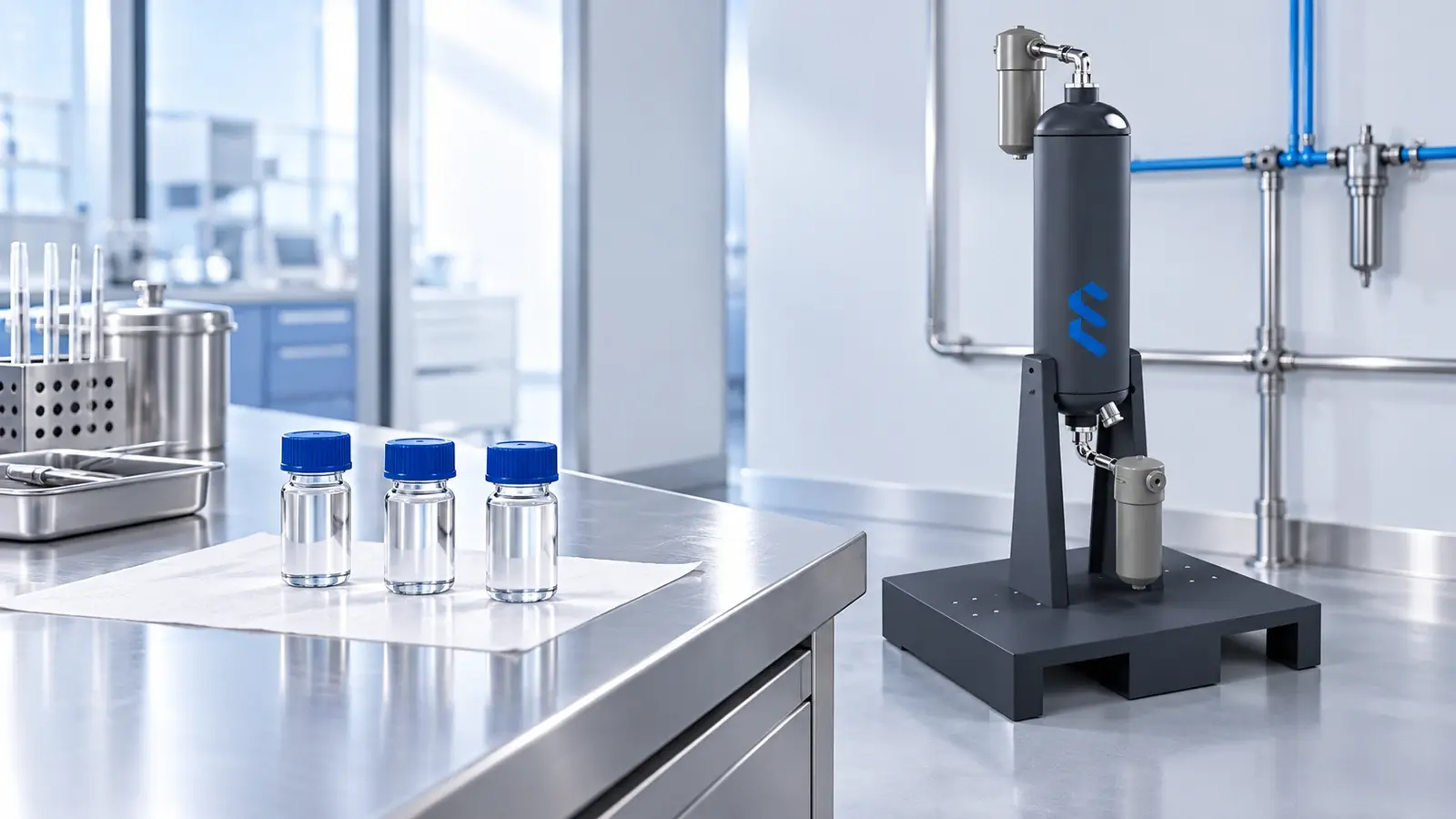
When a production line requires oil-free air, define the acceptable oil limit and the measurement location. Compressor technology and the quality delivered to the user describe different things. A purchasing specification should identify the result to be verified at the point of use as well as the equipment type.
Oil-free compression concerns the absence of oil injection into the compression chamber. Hydrocarbons entering with ambient air and contaminants in the distribution system still need assessment. Residues in old piping or shared connections can create a quality difference between compressor outlet and point of use. An oil claim does not automatically establish water or particle purity.
Under ISO 8573-1, oil assessment considers liquid, aerosol and vapour phases together. A vapour-only instrument should not be reported as a total oil assessment without addressing the other phases. Class 0 does not mean absolute zero contamination; it requires a documented limit more stringent than Class 1 for the relevant contaminant.
State the sampling location, normal and demanding operating conditions, test method, reporting units and instrument detection capability. Select sampling lines that do not introduce contamination. A statement of 'no oil' without uncertainty or detection limits is insufficient for technical acceptance. Set a repeat-check plan appropriate to the risk of quality variation.
Coalescing filtration addresses liquid and aerosol loads; activated carbon or another suitable technology addresses vapour. Water control requires separate drying. Product-contact applications may also need independently defined microbiological requirements. A useful quotation connects measured inlet conditions with the required outlet result.
Share your application, point of use, existing compressor and any test report with Mentis Engineering to define the treatment and verification scope for your oil-free air requirement.